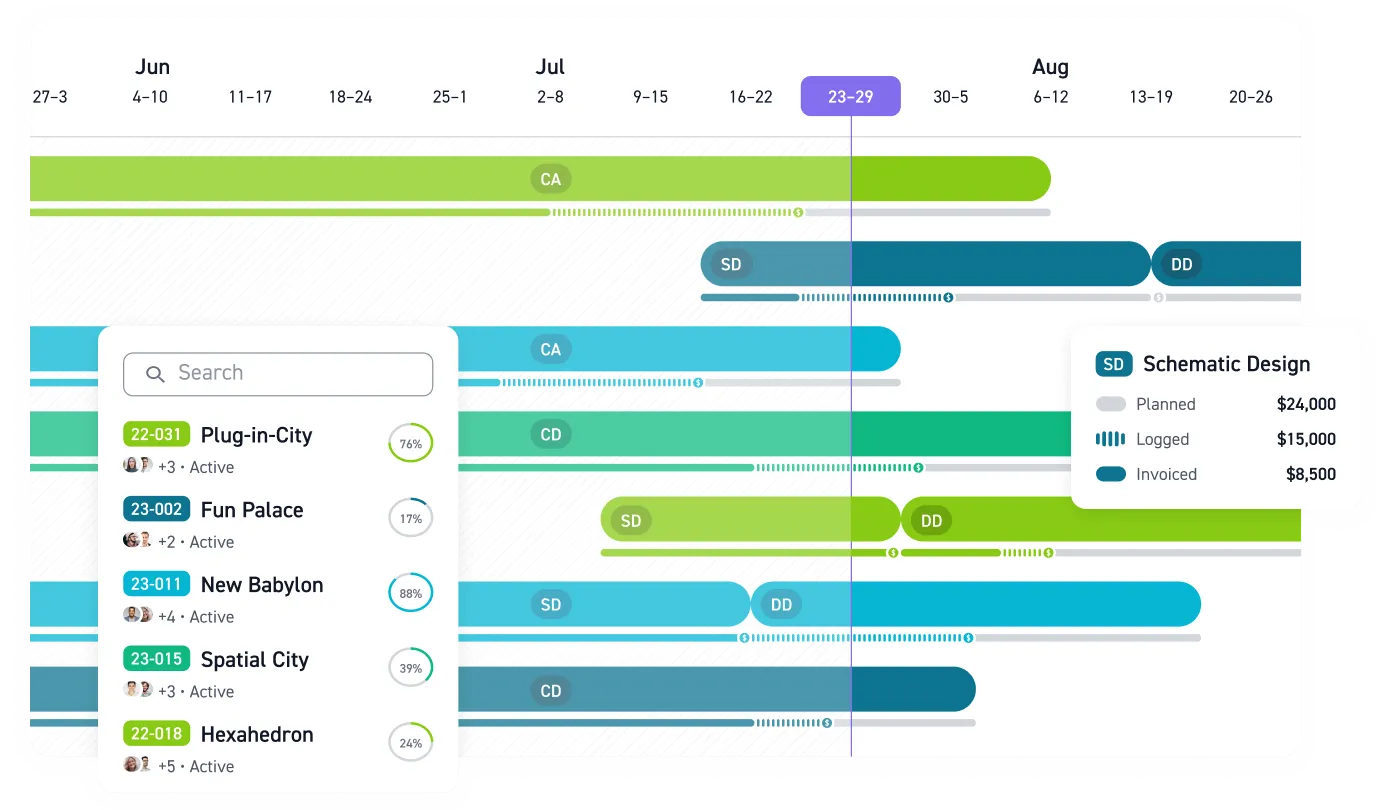




Firm management made easy

Most A&E firms don't struggle with finding CE courses. They struggle with keeping up with requirements across people, jurisdictions, and deadlines while projects still need to move.
Licensed architects may have state board CE obligations, and AIA Architect members carry a separate AIA membership requirement. If you're a principal or project manager, the harder part is tracking compliance across staff and renewal cycles without turning it into a year-end scramble.
AIA and NCARB Requirements
AIA Architect Members and International Associates must complete 18 Learning Units annually on a calendar-year cycle, January 1 through December 31. That annual total includes 12 HSW credits from AIA CES-registered providers, while the remaining 6 Elective credits can be self-reported from non-AIA sources.
A Learning Unit represents approved continuing education time under the continuing education standards. HSW credit is reserved for courses that meet AIA's HSW criteria under those same standards. Members cannot self-report HSW credits.
NCARB operates a separate but complementary system. Certificate holders get free access to 100+ online courses, all qualifying for HSW credit, with new courses added monthly. Since NCARB is a registered AIA CES provider, these courses count toward AIA membership requirements too.
If your firm has staff pursuing licensure through the Architectural Experience Program, NCARB also allows candidates to earn licensure experience credit through qualifying CE. That makes firm-sponsored CE more useful for pre-licensure staff.
State Licensing Requirements: Where Compliance Gets Complicated
AIA membership CE and state license renewal CE are separate systems. Satisfying one does not guarantee compliance with the other. They can differ on total hours, renewal cycles, and mandatory topic requirements.
Some states impose no CE requirement, while others add mandatory topics that generic HSW courses will not always cover. Here are examples that commonly create problems for firms:
- California: required topics include disability access and zero net carbon design.
- Florida: requirements include HSW hours plus advanced Florida Building Code coursework approved by the Florida Building Commission.
- Texas: annual requirements include barrier-free design, sustainable or energy-efficient design, and a cap on self-directed study.
- Illinois: biennial requirements include sexual harassment prevention training and, effective November 2024, high wind or natural disaster design.
For multi-state practices, those topic requirements compound. Each jurisdiction has to be reviewed on its own terms.
Missing a requirement can create renewal and practice problems, depending on the state. Firms need a tracking system that stays visible before deadlines get close.
What Counts as CE Credit
The distinction between HSW and Elective matters because state boards often focus on HSW hours. Not all learning activities earn the same type. Here's where common credit sources fall:
- AIA CES-approved courses report eligible credits to the credit transcript, and only courses that meet AIA's HSW criteria and carry an HSW designation earn HSW credit.
- NCARB courses are free for Certificate holders and count toward AIA requirements since NCARB is a registered CES provider.
- Practice management courses can qualify for HSW credit when offered through AIA CES-registered providers, a category many architects overlook in favor of design and technical content.
- Teaching credit earns 2-for-1 credit the first time a licensed architect presents an AIA CES-approved program.
Self-directed study, like reading and independent research, earns Elective credit only. For principals who already present at chapter events, teaching can be a fast way to build Learning Units.
Practical Strategies for Small and Mid-Size Firms
When you're managing a firm with projects in multiple states, CE tracking cannot be an afterthought. What works is simple, visible, and repeatable:
- Build a per-person, per-state compliance matrix. Track each licensed staff member's license states, total hours required, HSW minimums, mandatory topics, renewal deadlines, and current progress. Review it regularly instead of waiting until year-end.
- Plan CE around project lulls. Build it into the project milestone plan rather than treating it as after-hours work.
- Stack multi-credential courses. For staff holding LEED AP credentials alongside their license, selecting courses that count toward multiple credentials cuts total CE time.
- Use free platforms first. Free article-based HSW courses and more free HSW courses can help, and NCARB's library is free for Certificate holders.
Firms running at consistently high utilization tend to cut CE first, and that usually creates a bigger problem later. Clearer operational visibility makes it easier to protect learning time.
Set a firm-wide standard for CE record templates, too. NCARB requires architects to maintain CE documentation for 6 years. A centralized digital folder system, organized by staff member and year, protects the firm independent of what the AIA transcript shows.
CE as a Firm-Level Investment
Continuing education does more than keep licenses active. It gives firms a structured way to build judgment, share technical knowledge, and create visible growth paths for staff.
AIA identifies growth opportunities as a factor that improves retention, grouping professional development alongside coaching, recognition, work-life balance, and leadership trust. In-house learning programs support knowledge sharing and strengthen firm culture.
AIA's practical AI guidance reinforces the case for keeping learning time visible. Firms that put CE time on staff planning calendars and discuss it in performance reviews are more likely to keep it from disappearing under deadline pressure.
CE is infrastructure for the firm you're building.
Stop Letting CE Tracking Live in Spreadsheets
When CE deadlines, staffing decisions, and project schedules all live in different places, compliance becomes one more fire drill. Principals and operations leaders need a clear view of who needs what, when learning time fits into the schedule, and where capacity is already too tight.
Monograph helps A&E firms connect staffing, schedules, and operational visibility in one place. More than 13,000 architects and engineers across 1,800+ firms use Monograph to work smarter, faster. That clarity makes it easier to protect time for CE, spot workload conflicts earlier, and keep compliance work from getting pushed to the end of the renewal cycle. Book a demo.
Frequently Asked Questions
Do AIA learning units automatically satisfy state license renewal requirements?
No. AIA membership CE and state license renewal CE are separate systems. An architect can satisfy AIA requirements and still miss a state-specific rule on total hours, renewal timing, or mandatory topics like barrier-free design, sexual harassment prevention training, or advanced code coursework.
What's the simplest way to track CE across multiple licensed staff members?
Start with a per-person, per-state compliance matrix. Track each person's license states, required hours, HSW minimums, mandatory topics, renewal deadlines, and current progress in one place. Review it regularly so problems surface while there's still time to solve them.
How should firms document CE in case of an audit?
Keep a centralized digital folder system organized by staff member and year. That matters because the AIA transcript does not replace every documentation requirement, and NCARB requires architects to maintain CE documentation for 6 years.
How do small firms make time for CE when everyone is already fully utilized?
Treat CE as scheduled work, not leftover work. Place learning time around project lulls, use free platforms first, and choose courses that can satisfy more than one credential when possible.

.png)