


Firm management made easy

A&E project managers spend too much time assembling project updates from disconnected sources. By the time you've pulled time data, financials, and schedules into one view, the numbers are already stale. For firms where the PM is also designing, billing, and managing consultants, every hour spent compiling a status report is a billable hour that disappears.
A strong status report template gives you a repeatable structure so you can spend less time building reports and more time acting on what they tell you. On fixed-fee work, small tracking gaps turn into lost margin fast. The right template helps you catch phase-level drift before it becomes a fee problem.
The Components That Actually Matter
Generic project management templates miss what makes A&E work different: fees allocated by design phase, fixed-fee contracts with locked margins, and a project lifecycle that runs from design through construction administration. Effective A&E status reports typically include project management essentials tailored to the project and firm:
- Phase-based progress tracking: Measures work completed against the plan for each phase, including schematic design, design development, construction documents, procurement, and construction administration, using earned value calculations.
- Budget tracking and burn rate: Compares actual costs against the phase-level budget, with Cost Performance Index, or CPI, as a key health indicator. A low CPI means spending is outpacing the value of work delivered.
- Scope change log: Documents every change to authorized scope, including owner-requested additions and their fee and schedule impacts. Scope freeze exists as a cost control mechanism for exactly this reason.
- Rolling forecast: Projects where you will actually land based on current performance, producing a forward-looking estimate at completion rather than a backward-looking variance report.
Add resource utilization, risk flags, and outstanding owner decisions to round out the picture. Problems that surface only at invoice review are usually too late to fix without margin loss.
Percent Complete vs. Percent Spent: The Metric That Protects Your Fee
If your project status report template tracks only one thing well, it should be the gap between percent complete and percent spent. These two numbers tell different stories, and confusing them is one of the fastest ways to lose money on a fixed-fee project.
Percent complete is based on physical progress, separate from what has been billed. Percent spent measures how much budget has been consumed. The gap between the two shows whether your project is staying financially healthy. On lump sum contracts, payment is tied to milestones and percent complete for services. You cannot invoice more simply because you spent more.
The risk becomes obvious when spending climbs faster than delivery. Track both metrics at the phase level, not just the project total. Watch for these warning signs:
- Consultant invoices arriving ahead of deliverables: Subconsultant fees can represent 40% or more of total fees on architecture projects, and invoices paid ahead of actual progress inflate percent spent without moving percent complete.
- Phase budgets consumed before scope delivery: If budget burn is running well ahead of actual completion, the phase is heading toward an overrun unless the trend changes.
- Billing cycle misalignment: Billing that does not reconcile against physical progress creates a false sense of financial health until later phases absorb the shortfall.
Catching these signals early gives you time to act. You can reassign staff to protect the remaining budget, have a scope conversation with the owner before the fee is fully consumed, or restructure the delivery plan for later phases.
Anchor Your Template to AIA Phase Milestones
Your contract should shape when formal reporting happens. B101-2017 organizes the architect's basic services into sequential design phases and includes phase milestones. A practical template can track the approvals and decisions that often matter most at phase transitions:
- Date of each phase document submission
- Date written owner approval was received, when the contract requires it
- Any outstanding approvals or decisions blocking the next phase
That record gives the PM a clearer handoff point and exposes delays before they affect downstream phases. During design development, firms should track fees and staffing versus actual progress and take corrective action if either is slipping.
Why Spreadsheets Can't Keep Up
Firms whose operations center around disconnected spreadsheets are providing yesterday's value. Meanwhile, industry benchmarks show 31% of A&E projects are delivered over budget. When 75% of architecture firms have fewer than 10 employees, there is rarely a dedicated operations person to separate reporting work from billable work.
Most firms have tried consolidating spreadsheets, linking tabs, and building master trackers. The problem gets worse when you're reconciling time, budgets, and schedules across multiple active projects with different fee structures and phase timelines. Manual reconciliation introduces lag, and lag makes the report less useful.
That is why firms move practice management into one system. Workbench, for example, reported 8x faster staffing, 4x faster billing process, and 75% less unbilled fees, and more examples appear across the broader success stories library.
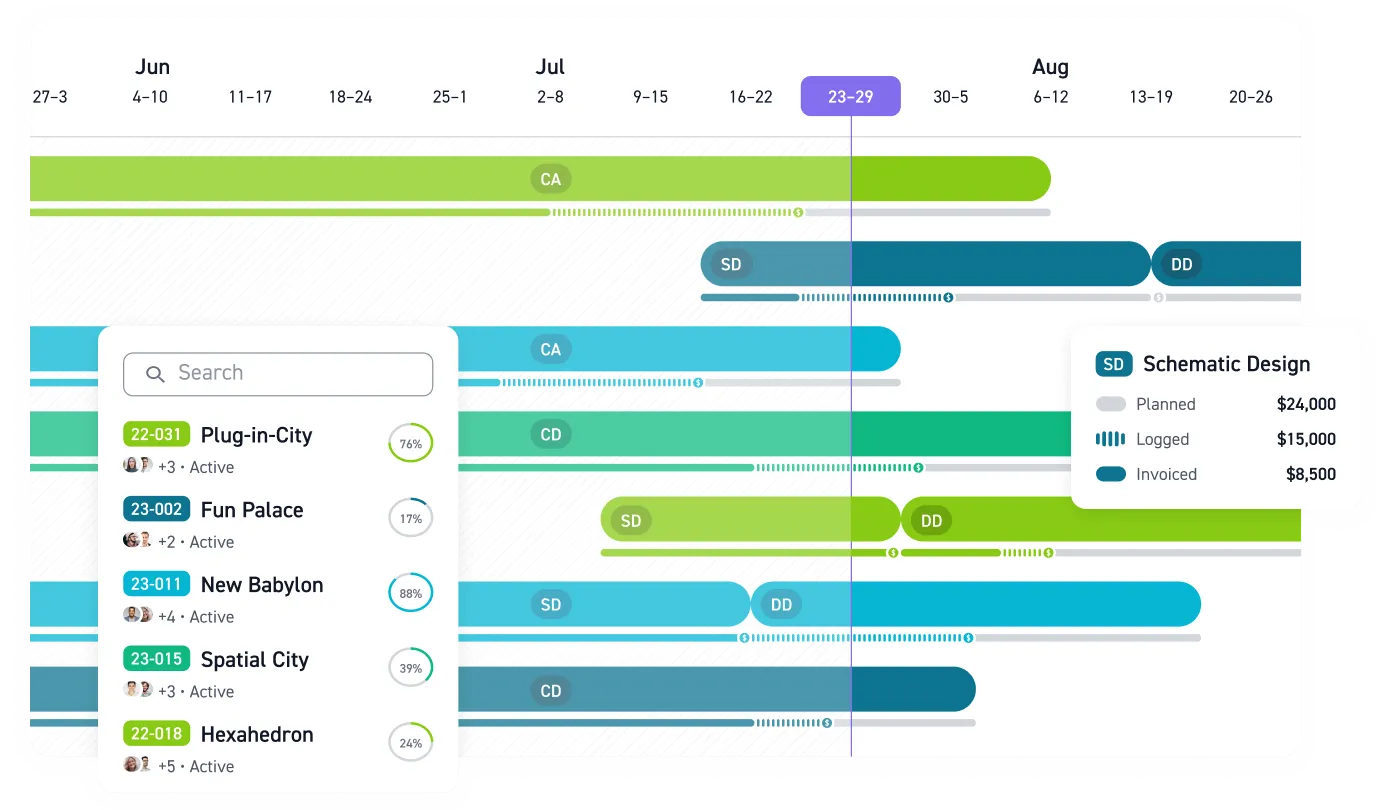
Monograph connects timesheet management with invoicing in one workflow and turns project data into real-time budget visibility. Monograph's MoneyGantt™ combines project timelines with budget-to-cash visibility across planned, logged, invoiced, and paid fees. That gives project managers a clearer view of schedule and financial progress in one place. Phase-level budgets, consultant coordination, and reporting for performance analytics help replace the spreadsheet shuffle most PMs know too well.
When you're running multiple concurrent projects on fixed fees, small tracking improvements across the portfolio can change the year-end result. Build the template around contract milestones, track the metrics that protect your fee, and use a system that stays current.
Stop Building Status Reports by Hand
If your project status report takes hours to assemble, you're already reacting too late. Fixed-fee A&E work leaves very little room for stale numbers, phase-level blind spots, or scope drift that gets noticed after the fee is gone.
Monograph gives project managers and firm leaders a live view of phase budgets, percent complete, consultant costs, and billing progress in one place. Instead of rebuilding the same report every week, you can use current data to catch problems earlier and walk into owner conversations with numbers you trust.
Your fee starts slipping long before the invoice shows it. See it sooner. Book a demo.
Frequently Asked Questions
What should a project status report template include for fixed-fee A&E work?
Track percent complete, percent spent, phase budgets, burn rate, scope changes, and a rolling forecast. If the report does not show where each phase stands financially, it will not help you protect the fee.
How often should A&E firms review phase-level status data?
At minimum, review phase-level data weekly during active phases and at every phase transition. Catching budget drift in real time is the difference between a small course correction and a costly overrun that the invoice cycle exposes too late.
Can spreadsheets still work for project status reporting?
They can work for a while, especially if you're managing a small number of projects. The problem starts when you have to reconcile time, budgets, consultant costs, and schedules across multiple active jobs. At that point, the report takes too long to build and the numbers are already stale.
Why tie a status report to owner approvals and phase milestones?
Because phase transitions are where scope, fee, and schedule risk often show up. Tracking submission dates, written approvals when required, and any outstanding decisions gives you a cleaner record of what was delivered, what was authorized, and what is blocking the next phase.