

Every proposal your firm submits costs real money. Architecture and engineering (A&E) firms spend an average of $12,000 to $15,000 per proposal, and the industry median win rate sits at 50%, according to recent benchmarks. A repeatable framework of proposal templates will not guarantee wins, but it gives your firm structure that sharpens submissions and protects the time you invest in business development.
The QBS Context That Shapes Everything
A&E proposals operate under a procurement framework most industries never face. Under qualifications-based selection, or QBS, firms compete on expertise and experience rather than price. QBS selection rules require client organizations to select architectural and engineering firms based on qualifications first. Fee negotiation happens after the top-ranked firm is chosen.
Some public-sector work follows a two-step process. Firms first submit a Statement of Qualifications in response to a request for qualifications (RFQ), and the client builds a shortlist. Shortlisted firms then receive the request for proposal (RFP) and submit technical proposals showing how they will achieve the owner's goals. Top-ranked firms are often invited to later interviews to clarify their proposals and demonstrate expertise.
Your project proposal template should be built around proving qualifications and demonstrating understanding.
Seven Sections Your Template Needs
A winning A&E proposal follows a consistent structure. Each section has a specific job, and weak execution gives evaluators a reason to rank you lower.
Cover Letter / Executive Summary. This section sets the frame for everything that follows. Lead with the client's problem rather than your firm's credentials. A widely shared proposal guide argues that strong proposals are organized around the evaluation criteria in the RFP. State your primary win theme in the opening paragraph.
Project Understanding. This is where you prove you analyzed the specific project. Procurement guidance on project needs identifies understanding of project requirements as a required element that stands apart from scope of services. Do not recycle boilerplate.
Proposed Technical Approach. Industry technical guidance explains that a technical proposal can expand on the owner's conceptual documents to address identified needs and goals. Most competitors describe what they will do. Better proposals explain why that work matters to the client's broader situation.
The rest of the template should include:
- Firm Qualifications and Relevant Experience: Curate projects that mirror the RFP's evaluation criteria instead of defaulting to your most prestigious work. The AIA performance goals guide emphasizes setting goals early in design and tracking results through measurement and benchmarking.
- Project Team and Key Personnel: Show who will lead the work on Day 1. Public-sector RFQs often use team criteria that weigh qualifications, team balance, and the ability to execute.
- References: Brief your references before submitting so they can speak to the capabilities your proposal claims.
- Fees, when required: Under true QBS, fees are not part of competitive ranking. Many state and local RFPs still request them. When fees are included, they should conclude a value argument built in every earlier section.
One principle ties the structure together. Strong RFP alignment turns every point in the RFP into sections, headings, and paragraphs so evaluators do not have to hunt for answers.
Breaking Out of the Sea of Sameness
Many A&E firms pursue the same projects with comparable qualifications. That sameness helps explain why median win rates sit near 50%. Strong proposal differentiation matters as much as the writing itself.
A common recommendation in practitioner advice is to frame the proposal around the client rather than the firm. Effective client framing opens in the client's context, uses their language, speaks to their pain points, and shows that you did your homework.
Win themes hold that differentiation together across the proposal. They are not taglines. They need to show up in introductory sentences, bullet points, and summary statements throughout the document. If your primary win theme is budget certainty, that message should carry from the cover letter through the fee section. Win themes come from capture planning, which happens before writing begins.
The Go/No-Go Decision Before the Proposal
Rigorous pursuit screening is common in A&E firms for good reason. At $12,000 to $15,000 per proposal, undisciplined pursuit burns resources fast.
A strong evaluation should answer a few questions before you commit:
- Have we been talking with the client? A cold RFP deserves more scrutiny than an opportunity you have cultivated for months.
- Do we understand the project goals? Intelligence beats guessing.
- Can we honestly beat the competition? If you cannot name specific reasons the client would choose your firm, that is a warning sign.
- Do we have a compelling delivery story? If the win theme is unclear before writing starts, the proposal will lack a unifying argument.
Pursuits that do not align with target markets, growth goals, or profitability benchmarks should stay off the list unless strategic planning surfaces a compelling exception.
Turning Project Data Into Proposal Evidence
The AIA operations primer raises a useful question: can you prove the content of your proposal responses? In a QBS environment, claims without documentation are weaker than documented evidence from a competitor.
This is where practice metrics become a business development asset. Phase-level budget tracking, actual versus estimated hours, on-time delivery records, and client satisfaction scores can all become proposal evidence when they are captured systematically during project delivery. Firms that track this data build an advantage with every completed project. Firms that do not are left making assertions they cannot back up.
For example, Workbench reports 8x faster staffing, 4x faster billing process, and 75% less unbilled fees after centralizing project operations in one system. That kind of operational proof supports stronger fee assumptions and delivery claims in future proposals.
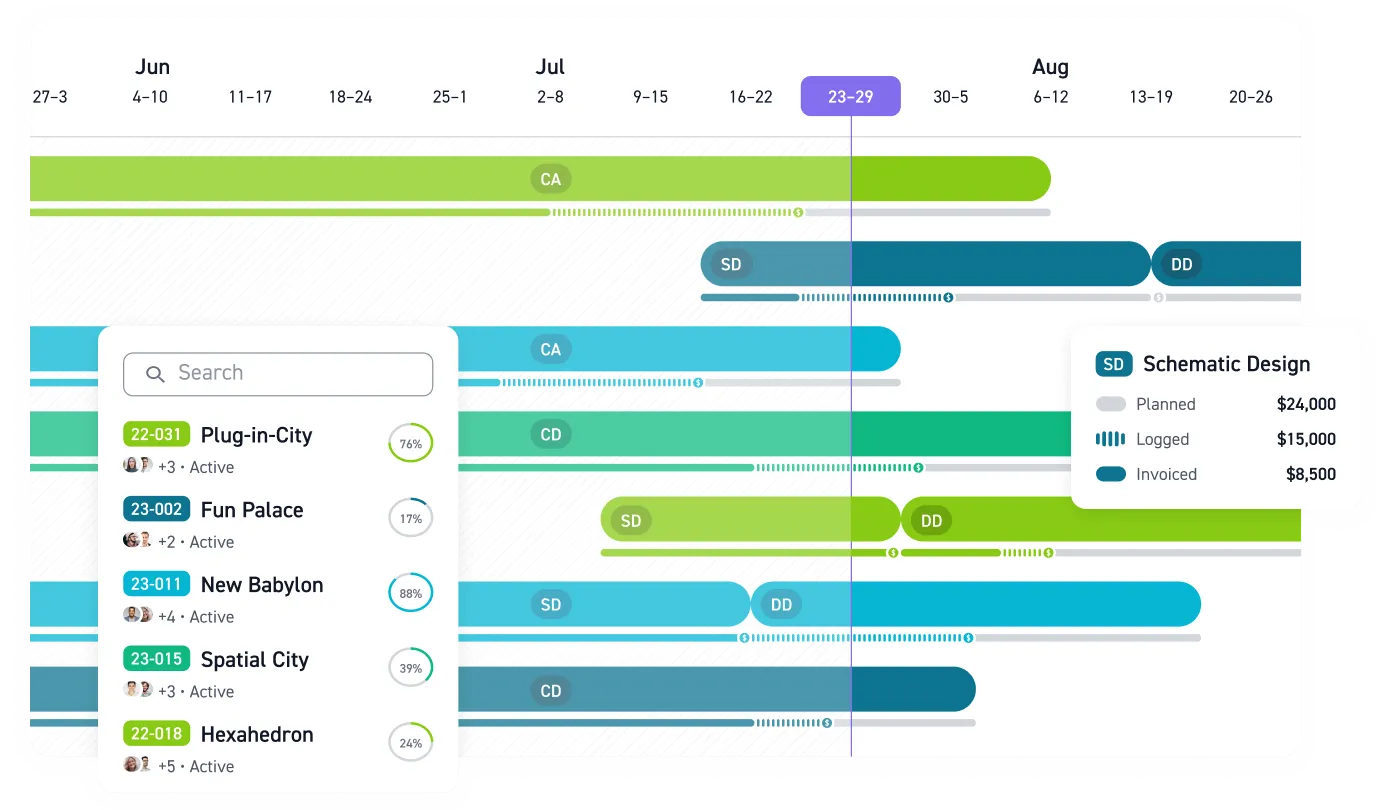
Monograph's budgeting, time tracking, and staffing data can give teams a cleaner starting point for proposal work. Our Pipeline feature connects leads, proposals, and forecasts in one place. When your project system and proposal process share the same data, your team has a better way to support fee assumptions and delivery claims.
Stop Writing Proposals From Memory
Every proposal gets harder when resumes, fee assumptions, staffing plans, and project examples live across old files, disconnected spreadsheets, and scattered systems. Principals, project managers, and operations leaders end up rebuilding the same story from scratch, even when the firm already has the evidence.
Monograph helps A&E firms connect leads, proposals, project history, phase budgets, and staffing data in one place. That gives your team a cleaner starting point for go/no-go decisions, more defensible fee assumptions, and stronger proposal language built on documented performance rather than recycled claims.
Your next proposal is already taking shape in your project data. Turn that evidence into your next win. Book a demo.
Frequently Asked Questions
What makes an A&E project proposal different from proposals in other industries?
Architecture and engineering proposals are shaped by qualifications-based procurement. In many cases, clients rank firms on expertise, experience, and project understanding before fee negotiation begins.
What should a project proposal template for architecture and engineering firms include?
A strong template covers seven core sections: a cover letter or executive summary, project understanding, technical approach, firm qualifications, project team, references, and fees when required.
How can firms make proposals more persuasive without rewriting everything from scratch?
Use a repeatable structure that mirrors the RFP, organize content around evaluation criteria, and build each section around clear win themes supported by documented evidence.
Why does project data matter in proposal writing?
Operational data turns claims into proof. Historical budget performance, staffing records, billing data, and client outcomes help firms support fee assumptions and delivery promises with evidence rather than general statements.
When should a firm decide not to pursue an RFP?
Before writing starts, firms should evaluate client relationship strength, project understanding, competitive position, and whether they have a compelling delivery story. If those elements are weak and the opportunity does not fit strategic goals, the answer should usually be no-go.