
You've probably been there: spending three weeks on a proposal, only to learn you lost to a competing firm. Loosing a proposal also means loosing wasted resources, the team hours that could have gone to billable work, and the nagging question of what you could have done differently.
After working with 1,800+ A&E firms over five years, we've learned the uncomfortable truth about winning RFPs. The firms consistently winning started working on those wins 18-24 months before the procurement notice dropped. Yet many A&E firms spread proposal resources evenly across all opportunities, missing the substantially higher returns available through choosing the right pursuits and building relationships early.
Research shows an industry average win rate of 46.5%, meaning firms lose more than half the opportunities they pursue. But that number masks a stark reality. Top performers achieve measurably different results than those chasing every opportunity.
The Go/No-Go Decision Matters More Than Your Proposal
The go/no-go decision isn't about whether your firm can perform the work. According to ACEC's framework, it's about fit with your firm's direction and an honest look at your chances, two fundamentally different questions.
Top-performing A&E firms evaluate opportunities across five categories before committing resources:
- Direction alignment and client relationship: Does this opportunity align with where you want your firm to be in three years? Is there an existing relationship to build on?
- Realistic win assessment: What's your actual chance of winning based on past performance data, not optimistic assumptions?
- Resource and capability evaluation: Can you deliver excellence with the team you actually have, not the team you hope to assemble?
- Financial criteria: Does the project meet your minimum margin requirements and fit your target project size?
- Project characteristics: Do the scope, timeline, and risk profile match your firm's sweet spot?
The challenge isn't creating these criteria. It's honoring them. Most AEC firms have some form of go/no-go process, but frequently override scoring because they're afraid of missing out. RFP FOMO drives bad decisions. Wrong pursuits waste time that could go toward opportunities that actually make sense for your firm.
The Groundwork Advantage Is Overwhelming
Relationship building and early engagement show the most significant measurable impact on A&E firm win rates. Incumbent firms achieve 60-90% win rates compared to just 15% for cold pursuits. That's a 45-75 percentage point differential. This represents the biggest factor you can control.
This translates to higher win probability from relationship-based opportunities. The data shows 4-6 times higher success rates, making relationship development exponentially more valuable than chasing volume.
Structured capture planning starts long before opportunities emerge. Effective groundwork shapes requirements around your firm's strengths before the RFP is written, not merely responding to predetermined specifications. When you've helped a client define their needs through early engagement, you're not competing. You're confirming.
The math is straightforward. Resources invested in client retention and relationship deepening yield four to six times higher win probability than equivalent investments in new prospect development. Treat relationship building as a protected, funded business function, not something that happens when your team has spare time.
Demonstrating Project Management Capability
Under qualifications-based selection, the procurement method that helps clients control construction costs and achieve consistently high project satisfaction, your project management credentials serve as primary differentiators.
Evaluation committees assess project management capability across several categories:
- Personnel capability: Depth of resources, relevant experience, and demonstrated availability of proposed team members, with specific emphasis on those who have directly worked together on similar past projects
- Team cohesion and past performance: Documented history of the project manager and key personnel working together on previous projects with verifiable results
- Budget and schedule control: Quantified track record of the assigned team managing costs and timelines effectively on projects of similar scope
- In-house problem-solving capability: Demonstrated capacity to solve complex project issues using internal resources
The key word is "demonstrated." Promised capabilities don't differentiate. Verified track records do. When your proposal claims excellent budget control, evaluators want specific projects where your team delivered on budget, with references they can call.
Winning proposals address the "what, why, and how" using the same terminology as the RFP. Study each RFP and determine two to three primary themes aligned with client priorities, then weave them consistently through all sections.
Just like you wouldn't start a design without understanding the site, don't start a proposal without understanding your real chances. Review your last three proposals honestly. Do they open with client organizational context or with your firm history? Winning proposals begin with the client's drivers because that's what clients care about.
Visual presentation reinforces this client-centric approach. Include imagery showing design thinking processes: material selection rationale, site analysis evolution, concept development sequences, rather than exclusively presenting finished product photography. Show how you work, not just what you've built.
The Data-Driven Pursuit Decision
Top-performing firms track their business development performance consistently. They know win rates by opportunity type, relationship strength, project sector, and team composition. Firms like Able City in Texas achieved 15% profit growth and 4x efficiency gains by implementing integrated practice management, providing real-time visibility into project performance across their 29-person team. This data transforms go/no-go decisions from gut feelings into evidence-based decisions about where to spend time.
Over 13,000 architects and engineers across 1,800+ firms use Monograph to work smarter, faster. Firms using Monograph add 21% more revenue on average in their first year by combining clearer insights with more efficient workflows.
When pursuit decisions aren't backed by data, it's easy to overestimate your chances, underestimate the effort, or say yes to work that doesn't fit your business goals. Most firms lack easy access to data about past proposal success rates, project profitability, resource availability, or client history.
Investment in pursuit tracking provides measurable advantage through better decisions about where to focus. You can't improve what you don't measure, and you can't make informed decisions about which opportunities to pursue without understanding which types your firm actually wins.
Track Your Real Win Rates Before the Next RFP Drops
The most efficient firms already track which pursuit types they actually win. They know their real win rates for relationship-based opportunities versus cold pursuits. They can tell you which project types generate profitable work and which ones consistently go over budget. They've stopped guessing and started deciding based on data.
Meanwhile, you're still making pursuit decisions the same way you did five years ago: gut feel, optimistic assumptions, and fear of missing out. You don't know which team compositions deliver the highest success rates. You can't identify patterns across won and lost proposals. When your go/no-go scorecard says "no," you override it because you lack the data to trust it.
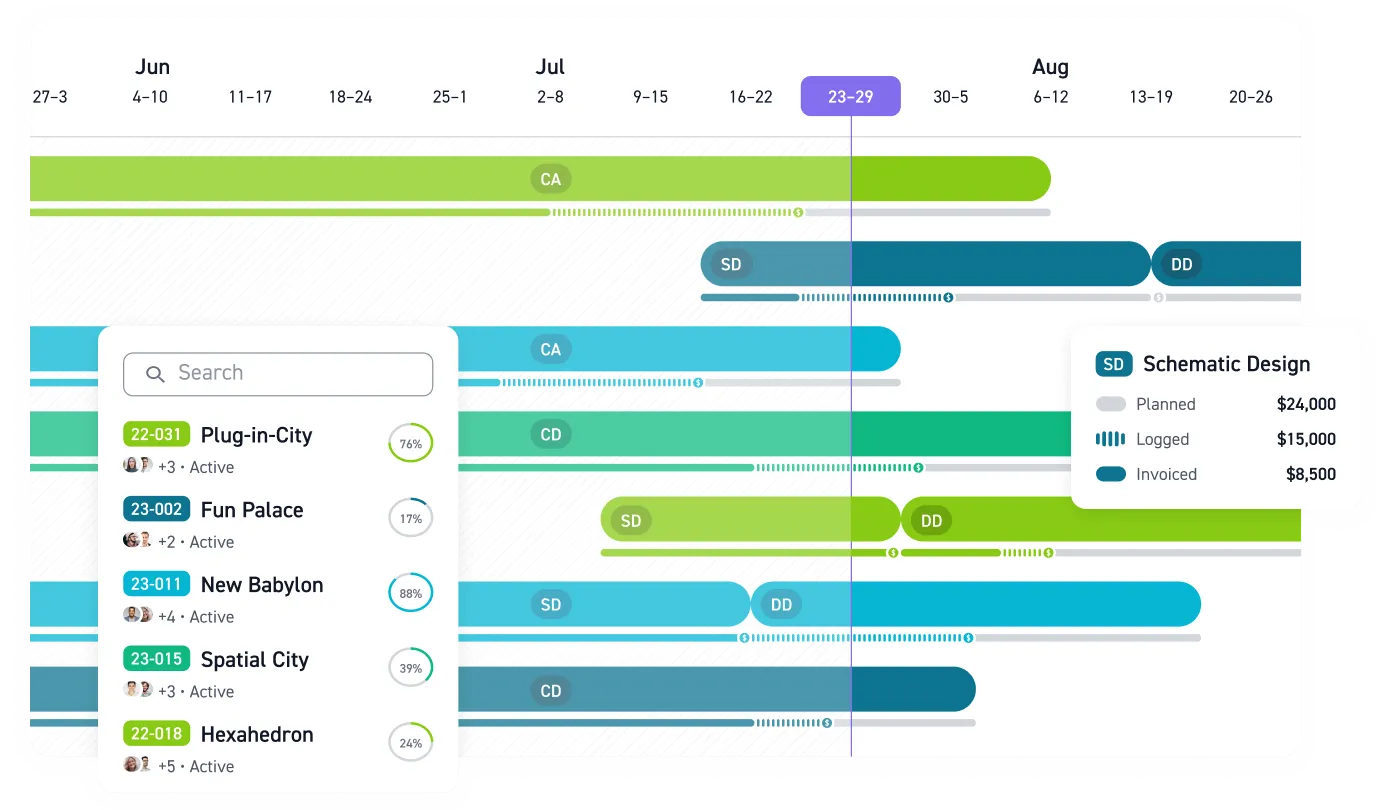
Monograph connects pursuit tracking directly to project performance. Track win rates by project type, client relationship strength, and project sector. See which opportunities translate to profitable work. Monograph's MoneyGantt™ provides instant visual intelligence into which pursuit types translate to profitable work, showing budget-to-cash progression across your entire portfolio. When the next RFP lands, you'll know whether you have a 70% chance or a 15% chance before writing a single word.
The firms winning consistently aren't better at proposals. They're better at choosing which proposals to write in the first place. They've replaced "RFP FOMO" with data-driven decisions about where their team's time generates the highest return.
Your next winning proposal starts with the data you're tracking today. Get started with Monograph.
Frequently Asked Questions
How do I calculate our actual win rate by opportunity type?
Start by categorizing your last 12-24 months of pursuits into meaningful segments: relationship-based vs. cold pursuits, project size ranges, client sectors, and procurement methods. Track wins and losses in each category to calculate baseline win rates.
Most A&E firms discover they win 60-80% of relationship-based opportunities but only 10-20% of cold pursuits. Use this data to weight your go/no-go scoring system toward relationship opportunities where your win probability is highest.
What if we don't have historical data to inform go/no-go decisions?
Start tracking today, even if it's just a simple spreadsheet. Record every pursuit decision with basic information: opportunity type, client relationship strength, estimated effort, outcome, and project profitability if won.
Within 6-12 months you'll have enough data to spot patterns. Meanwhile, use industry benchmarks as placeholders: assume 60-90% win rates for incumbent/relationship pursuits and 15% for cold opportunities unless your firm has evidence suggesting otherwise.
How early should we start relationship building for upcoming opportunities?
Plan for 18-24 months of relationship development before an RFP drops. The firms winning 60-90% of their pursuits aren't reacting to RFPs. They're shaping requirements long before procurement starts.
Focus relationship time on clients where you have relevant project experience and can genuinely add value during their planning phase. Help them define their needs before budgets are set and specifications are written.
Can small firms compete against incumbents with 60-90% win rates?
Yes, but not by responding to more RFPs. Small firms win by becoming the incumbent on smaller projects first, then using that relationship to compete for larger work. Target opportunities where established firms have no relationship advantage.
Focus on clients early in their planning process where you can demonstrate value before they've formed loyalty to another firm. Your advantage is agility and principal involvement. Use it during relationship building, not just proposal writing.
How do we track which types of pursuits our firm actually wins?
Create a pursuit tracking system that captures key variables for every opportunity: client relationship type (existing/new), project size, sector, procurement method, estimated effort, and outcome. Track profitability data for won projects to identify which pursuit types generate the best margins.
Practice management platforms like Monograph connect pursuit tracking directly to project performance data, showing you which opportunity types translate to profitable work. Review quarterly to adjust your go/no-go criteria based on actual results, not assumptions.

.png)