
Introducing: Monograph Pipeline
Nobody starts an architecture or engineering firm to be a salesperson.
But every principal architect and engineer has a side job in business development.
Meeting with clients. Chasing leads. Writing proposals.
Behind this activity, these 2 questions never go away for firm owners:
- “Do we even have enough work for the next 6 months?“
- “Do we even have enough staff?”
Today, most A&E firms have zero confidence in their pipeline
Leads get lost in spreadsheets and inboxes.
Forecasts are too slow to build or based on garbage data.
You end up making unsustainable commitments, or losing work you should have won.
That’s why we built Pipeline.
The Pipeline Problem for A/E
If you look at the tools A/E firms are told to use for business development, they fall into two camps:
On one side, you have CRMs built for sales organizations — tools designed for quotas, commissions, and pipeline velocity. They’re powerful, but they assume dedicated sales teams, complex setups, heavy marketing motion, and constant upkeep.
On the other side, you have spreadsheets, inboxes, and undocumented knowledge. Opportunities live in emails. Forecasts live in someone’s head. Capacity lives… somewhere else entirely.
Most firms end up stuck in between.
You’re expected to “run pipeline,” but without the resources or structure those tools assume. So work gets lost. Forecasts are guesswork. And staffing decisions are made too late.
That gap — between opportunity and reality — is where firms pay the price.
Why We Built Pipeline
As an architect, I’ve lived this problem.
You don’t just need to know what you might win. You need to know when work will start, who will staff it, and how it fits into everything else your firm is already delivering.
That’s not a sales problem.
That’s a firm management problem.
So we didn’t set out to build “a CRM for architects.”
We built Pipeline to connect opportunities directly to how your firm actually operates — your projects, your people, and your revenue.
Pipeline gives firms a clear, shared view of what’s ahead, so they can grow deliberately instead of reactively.
What Pipeline Changes
With Pipeline, opportunities no longer live in isolation.
They connect to proposals.
They connect to forecasts.
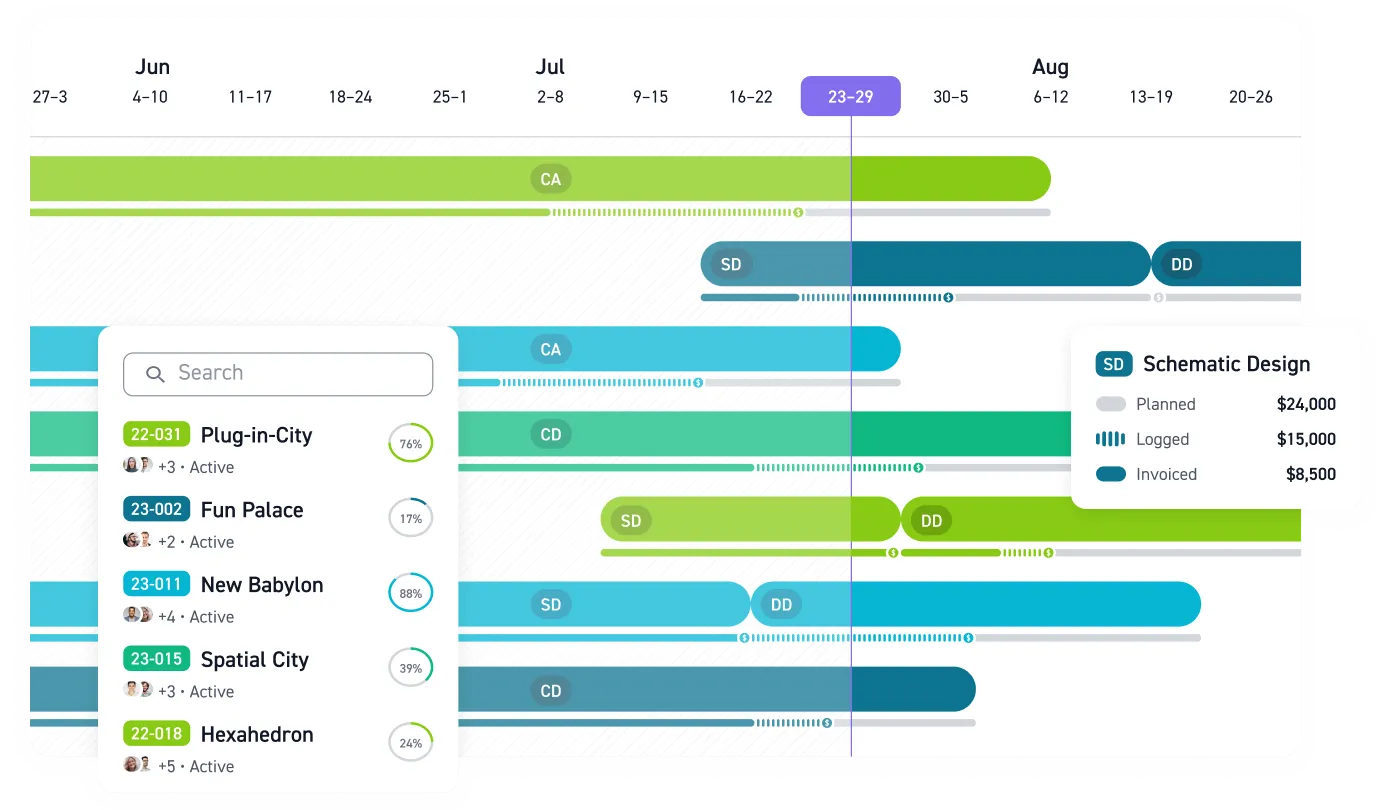
They connect to staffing plans and real capacity.
Instead of asking:
- Can we win this?
- Can we staff this?
- What happens if we do?
…at three different times, in three different tools, with three different answers —
You can see it all in one place.
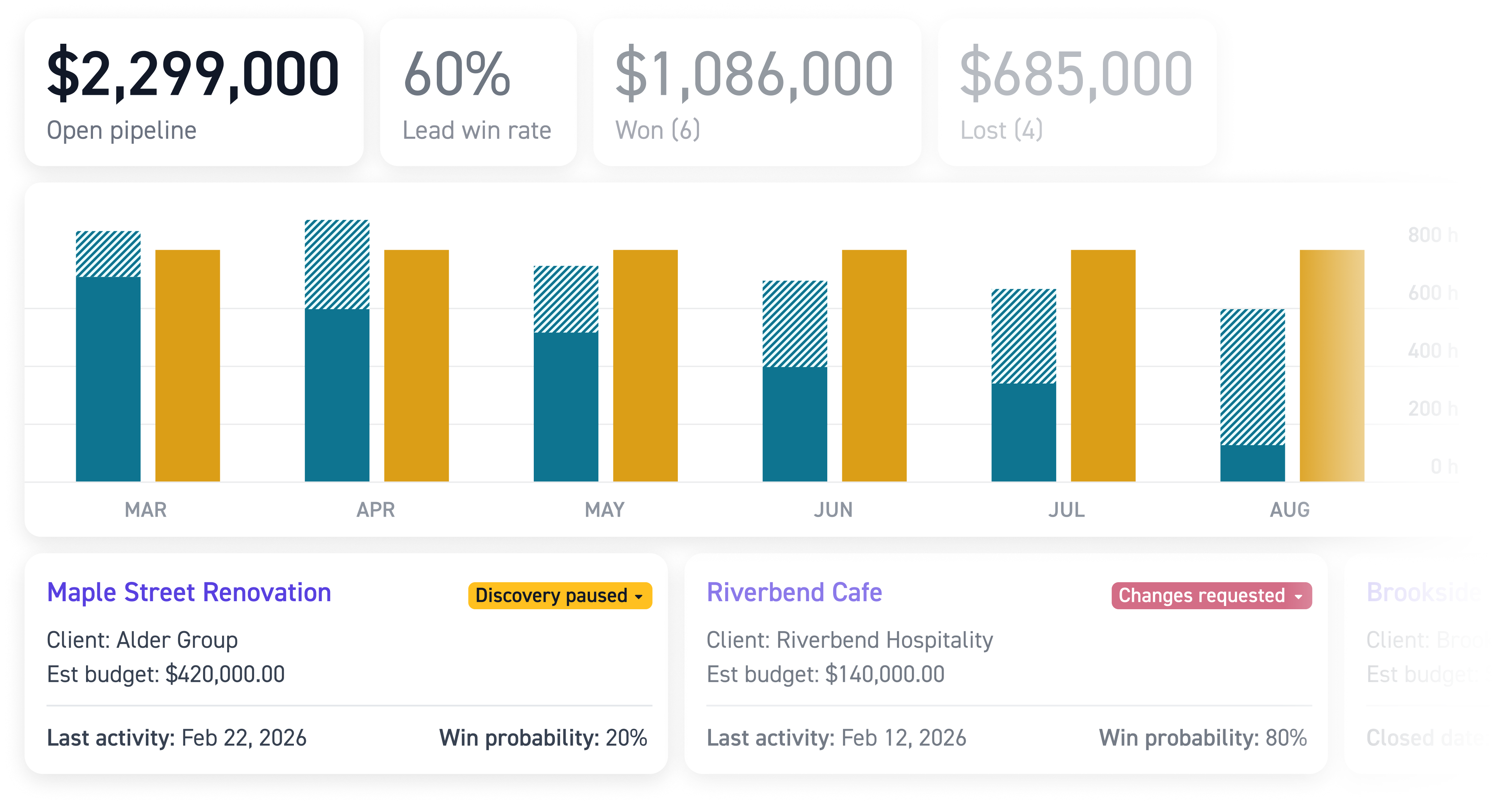
Pipeline helps firms estimate future revenue, understand timing, and make smarter decisions before they commit — not after the damage is done.
This isn’t about chasing growth at all costs.
It’s about confidence.
What That Confidence Looks Like in Practice
For firms using Pipeline today, clarity shows up in very practical ways — especially when it comes to staffing and long-term planning.
“Pipeline has really given us a clear view of staffing our opportunities as well as our retention rate for those opportunities. It’s been a great tool and given us really valuable insight into our business.”
— Andrew Lyon, Principal, Studio Lyon Szot
This is what happens when pipeline isn’t just tracked — but understood in the context of how a firm actually operates.
Built for How Firms Actually Work
Pipeline was built for firms without:
- Dedicated sales ops teams
- Full-time CRM administrators
- Months-long implementation cycles
It works the way architects and engineers think — visually, pragmatically, and tied directly to delivery.
No heavy setup.
No abstract stages disconnected from reality.
Just a clear line of sight from opportunity → work → impact.
A Different Standard for Growth
Software should adapt to the way firms already work — and make it easier to run a healthy, sustainable business.
That belief guided every decision we made with Pipeline.
It’s not a bolt-on.
It’s not a checkbox feature.
It’s a commitment to helping firms plan their future with clarity — so growth feels intentional, not reactive.
We built Pipeline for the firms doing the real work of shaping the built environment.
For the firms that can’t afford guesswork.
—
Robert Yuen
CEO & Co-Founder, Monograph
See Pipeline in Action
Know what’s coming before it becomes a problem.
Pipeline connects your opportunities to capacity and revenue so you can make decisions with confidence.


.png)