



Firm management made easy

If you're spending more time copying data between Revit and Excel than actually designing, something's broken. The good news: automated CAD technologies now offer measurable approaches to the repetitive task problem. They deliver significant time savings in documentation and reductions in quantity take-off processing time.
Automated CAD is more about algorithm-driven intelligence rather than digital pencils. Effective automation involves creating learning algorithms that develop specific intelligence in design synthesis, where machine learning automates processes more effectively than simple parameter adjustments. For project managers and operations leaders at A&E firms, this distinction matters. You're doing more than just digitizing old workflows, you're fundamentally changing how design production works.
Industry data shows AEC automation adoption remains at only 27%. This low industry penetration means mid-size firms can take a deliberate approach without falling behind competitors.
Four Automation Technologies That Matter
Not all automation delivers equal value. For 5-50 person firms balancing technical work with project management responsibilities, four technologies offer the most practical returns.
- Parametric design uses algorithmic design relationships, allowing automatic updates across entire models when parameters change. This approach offers task automation benefits. It handles last-minute design changes particularly well, valuable in structural engineering where design iterations occur frequently.
- Generative design creates multiple design alternatives based on specified constraints. It runs on standard hardware, addressing concerns about computational requirements without requiring specialized hardware investments. Users can load models into Revit quickly after choosing preferred results.
- Scripting tools like Dynamo and Grasshopper provide visual programming capabilities that integrate with your existing BIM environment. These platforms allow teams to query and filter data from Revit models using structured queries, automating data extraction that previously required manual effort.
- BIM automation now includes AI and natural language processing capabilities. Text2BIM for models is an LLM-based multiagent framework that can generate building models from natural language instructions, allowing designers to generate BIM models in the early design stage.
Each of these four technologies one addresses specific workflow bottlenecks that drain time from actual design work.
Measurable Efficiency Gains
Project managers need defensible metrics when building the case for automation investment. The research delivers concrete numbers from credible sources worth sharing with firm principals. Overall, Teams report documentation time savings reaching up to 90% One study documented a 72% processing reduction and 64% reduction in total time when using BIM automation for quantity take-offs. And BIM delivers results with 38% cost reduction and 35% time reduction when used throughout construction phases.
Beyond individual tasks, project-wide benefits compound when automation spans multiple workflows. A recent case study documented project-wide BIM benefits including 38% cost reduction and 35% time reduction for projects using BIM throughout all construction phases.
BIM projects generate fewer RFIs, only 10% of what typical non-BIM projects generate, saving management time at an average of 9%. Change orders were also reduced from 12% to 7% of project costs when comparing 2D to 3D workflows.
Connecting Design Automation to Project Management
Here's where many firms miss the opportunity. Design efficiency gains deliver real value only when connected to project management outcomes. Dynamic Engineering, a 10-person Florida-based engineering firm, achieved 25% profit growth and 2x efficiency gains after replacing Excel with Monograph's practice management platform that automated forecasting and billing workflows. This demonstrates that the real multiplier comes from integration across systems.
CAD and BIM automation that integrates with project management also integrates design costs into a single workflow. This unified digital environment connects what your team produces to how you track progress and bill clients. And BIM reduces errors, helping create and stick to aggressive yet realistic budgets.
Automated clash detection capabilities also reduce unplanned rework that typically consumes significant team capacity. This error reduction translates directly to predictable capacity planning, letting you make data-driven staffing decisions based on actual design production metrics.
Implementation Realities for Mid-Size Firms
The AIA emphasizes that CAD automation cannot be implemented in isolation from broader firm operations. Technology affects culture end-to-end, not just design production.
Unlike larger firms with redundant staff, 5-50 person firms cannot easily spare team members for extended training periods. The AIA's Technology in Architectural Practice (TAP) Knowledge Community is developing "technology recipes" specifically designed for small and mid-size firms, emphasizing low-lift, proven tools with equitable access considerations.
Key principles from this emerging framework include:
- Equitable access to technology for firms without enterprise budgets
- Low-lift proven tools that small firms can implement without extensive resources
- Codes and sustainability integration
- Interoperability considerations as firms scale automation
- Playbook mindset approach for technology adoption, drawing lessons from BIM adoption patterns
These principles provide a practical roadmap for firms ready to move beyond experimental automation toward systematic implementation. Most mid-size firms already have the technical foundation needed for automation success. Successful workflow integration requires collaborative planning for handoffs with clarity in timing between team members.
What's Coming Next
Four credible trends are reshaping CAD automation for architecture and engineering firms.
MIT researchers have developed AI agents learning CAD to create 3D objects from sketches. This technology moves beyond autocomplete features to understanding CAD operations and design intent. This represents a credible direction for commercial CAD platforms within 3-5 years.
Meanwhile, generative design is transitioning from experimental feature to standard capability. The Vectorworks 2025 AEC Trend Report, based on surveying over 500 AEC professionals, shows BIM adoption reaches 68% into their design practices, creating the technical foundation necessary for generative design integration.
Major architecture and engineering firms are gathering at computational design conferences, indicating that computational design has transitioned from specialist practice to standard methodology at leading practices. However, with low adoption and integration, the profession remains in early adoption phases. As computational design capabilities become more accessible, these skills are transitioning toward baseline competency. This shift creates opportunity for firms that build computational design capabilities deliberately during this transition period.
Turn Design Time Savings Into Profitable Business Growth
Maybe you’ve considered investing in CAD automation because you know cutting design time matters. But here's the reality: saving 90% on documentation time means nothing if you can't track where those hours go next, if invoices still sit in draft for weeks, or if you're still guessing which projects are actually profitable.
Firms winning with automation aren't just saving design hours. They're connecting those efficiency gains to business systems that turn saved time into tracked capacity, billable work, and collected revenue. Dynamic Engineering didn't just automate their design workflows. They paired automation with intelligent project management that handled forecasting and billing automatically. The result: 25% profit growth and 2x efficiency gains.
That's the pattern we see across 13,000+ architects and engineers across 1,800+ firms using Monograph. Design automation creates the capacity. Practice management captures the value.
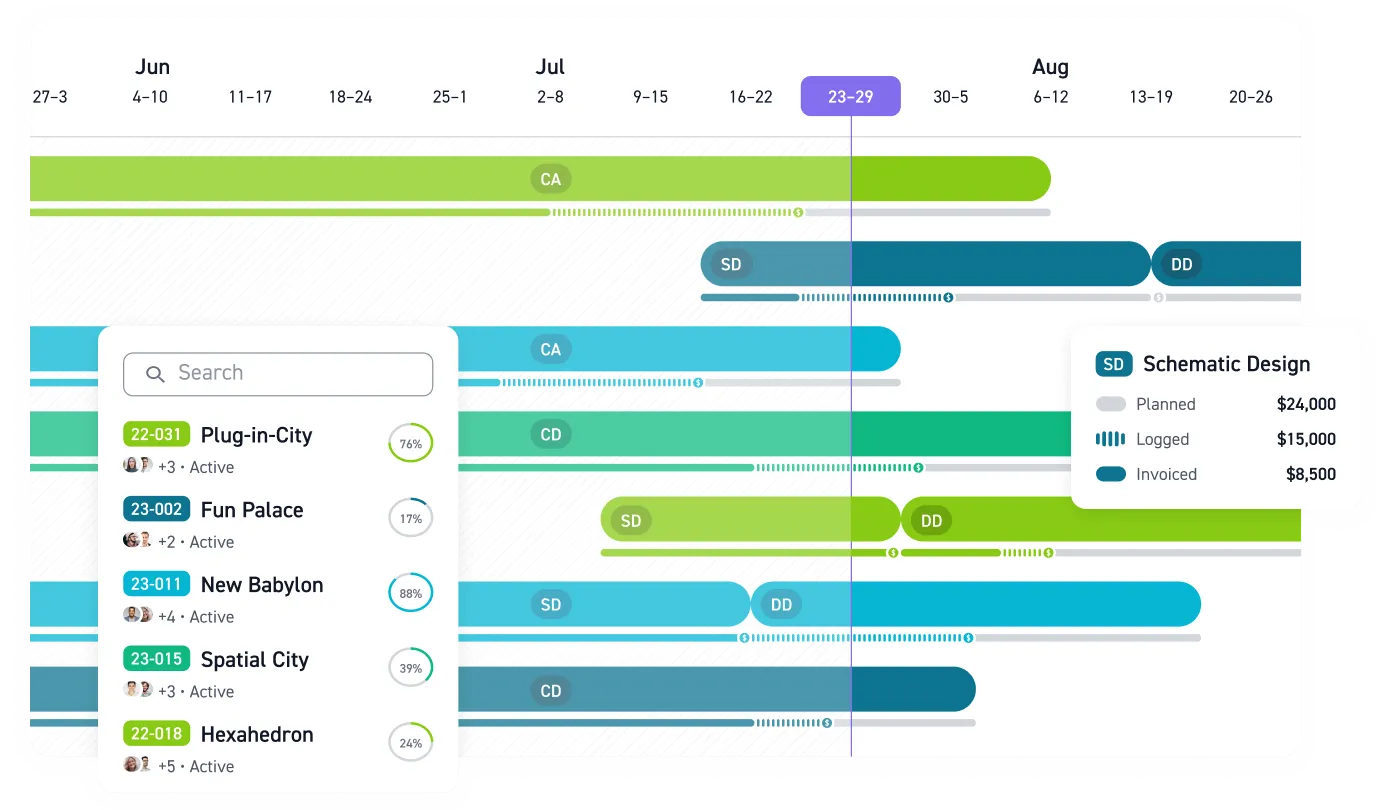
Your team logs fewer hours on repetitive documentation. Those saved hours get redirected to billable work. Monograph's signature MoneyGantt™ feature provides instant visual intelligence, transforming complex financial data into simple visual insights that show budget-to-cash progression (planned, logged, invoiced, paid). Automated invoicing gets those fees into your account 2x faster.
Without integrated practice management, your automation investment delivers hypothetical efficiency but measurable chaos. With the right systems connected, every hour saved from automated documentation becomes visible capacity you can allocate, track, and bill.
Firms are discovering that the real advantage comes from connecting design efficiency to business operations. See how Monograph turns design efficiency into business profitability.
Frequently Asked Questions
Do we need dedicated IT support to implement CAD automation?
Not for the tools that matter most to 5-50 person firms. Platforms like Dynamo and Grasshopper integrate directly into Revit workflows you already use, and most firms get started with visual programming that doesn't require coding expertise. The AIA's "technology recipes" framework specifically targets low-lift implementation for small and mid-size practices. Start with one repetitive workflow (sheet generation, schedule updates, or quantity take-offs) and expand from there. The bigger implementation challenge isn't IT support. It's connecting design automation gains to your project tracking and billing systems so saved hours translate to business value.
How long before we see ROI from automation investments?
The timeline depends on what you're measuring. Documentation time savings appear immediately. Firms report 90% reductions on automated tasks within weeks of implementation. But true ROI requires connecting design efficiency to business outcomes: Are saved hours redirected to billable work? Are projects staying profitable? Are invoices getting out faster? Firms that integrate design automation with practice management systems see measurable profit improvements within 3-6 months. Without that connection, you'll have impressive time-saving metrics but unchanged profit margins.
What's the biggest challenge in getting our team to adopt new automation tools?
It's not training or technical complexity. It's proving the business case without disrupting active projects. Your team needs to see automation saving time on real work, not adding administrative burden. Start with the most repetitive, frustrating tasks where wins are obvious: generating documentation sets, updating schedules across views, processing quantity take-offs. Let one project manager pilot the workflow and share results. The challenge shifts from "Will this work?" to "How fast can we roll this out?" when teams see hours saved on tasks they hate doing manually.
Should we automate design or project management first?
Both, but in the right sequence. Design automation creates capacity. It frees up hours previously spent on repetitive documentation. Project management automation captures that value. It tracks where those hours go, ensures they're allocated to profitable work, and gets invoices out before cash flow becomes a problem. Firms that automate design first without modernizing project tracking end up with saved time that disappears into untracked overhead. The firms seeing 25%+ profit growth automate design workflows while simultaneously implementing practice management systems that track capacity, monitor budgets in real-time, and handle billing automatically.
How do we measure automation success beyond time savings?
Track the business outcomes that time savings should deliver: project profitability by phase, utilization rates showing productive capacity allocation, invoice cycle time from project completion to payment collection, and reduction in budget overruns from better real-time visibility. Time saved on documentation only matters if it translates to billable hours on profitable work, faster project delivery without quality compromise, or reduced administrative costs. Firms using integrated practice management platforms see these connections clearly. Design automation creates the capacity, and intelligent project tracking proves where that capacity delivers business value.


.png)