

Firm management made easy

Engineering firms sell hours, which makes job costing the closest thing the business has to a structural analysis. Labor runs 70 to 75% of total operating expenses at design firms, and every one of those hours lands on either a project or overhead. Job costing tracks all costs at the individual project level, phase by phase, with direct labor as the primary driver. For a finance manager, timing decides whether job costing controls margin or just records it.
The Metrics That Decide Whether a Fee Makes Money
Every fee calculation rests on the split between direct labor charged to projects and overhead labor supporting operations. The ratio between them sets the overhead factor, and the overhead factor sets billing rates. Utilization, overhead rate, and two multipliers turn labor cost into a billing rate:
- Utilization rate: billable hours divided by total available hours. The industry average sits around 60%.
- Overhead rate: total indirect costs divided by total direct labor. Typical firms run 150% to 175%.
- Break-even multiplier: overhead rate plus 1.0, the minimum you must bill per dollar of direct labor before any profit exists.
- Net multiplier: net revenue divided by direct labor. PSMJ recommends 3.0 or better, and the 2024 fiscal year figure came in at 3.28 industry-wide.
Small gaps between labor cost, overhead, and billing rate decide whether a fee holds. The break-even billing rate is the line where direct labor and overhead are covered before profit exists.
Percent Spent and Percent Complete Measure Different Things
Percent spent measures budget consumed. Percent complete measures work accomplished. In earned value terms, spending more budget than the work completed has earned means the project is already running over. Traditional accounting reports often miss that because they compare planned with actual spending, not earned work.
Earned value closes that gap with an objective measure of accomplishment. Compare scoped hours with consumed hours at the phase level, and the overrun is visible regardless of what was billed. Rework or internal review hours that never reach an invoice still land in cost. On lump-sum contracts the discipline is internal; clients see rolled-up numbers, but the estimate underneath gets built by discipline and phase. An ACEC study of lump-sum engineering work ranked poorly defined scope as the top challenge on those contracts, which puts a premium on knowing exactly when work crosses from in-scope to out.
Where the Process Breaks Down at Small Firms
Red Brick Consulting Engineers and Architects, a 7-person engineering and architecture firm using Excel, moved to Monograph and reported 25% time saved on admin, 2x faster billing, and 25% less budget overage. Recurring failure points include:
- Time logged days or weeks late, reconstructed from memory. Rounded or misfiled hours corrupt project costs and future fee proposals.
- WIP that ages unbilled. Work completed but not invoiced ties up cash the firm has already spent.
- Consultant invoices on separate timelines. Structural, MEP, and civil subconsultants each bill with their own documentation standards.
- Disconnected systems. One tool for project management, another for time, a third for billing, with spreadsheets filling the gaps. Decisions get made on out-of-date data.
Each lag surfaces eventually, often at month-end close, when it's too late to reprice a phase or bill for the scope that crept in.
Why Timing Decides the Margin
Because labor dominates the cost base, every unrecovered hour comes straight out of margin. Job costing only helps when the numbers arrive in time. Catching a phase running past its hour budget in the same week lets you reprice the remaining scope, document the change with the client, or pull staff off before the overrun compounds. At month-end close, the hours are already spent and the phase already delivered.
Real-time costing surfaces unbilled work while a project manager can still act, before a paused project accumulates months of uncollectable time.
Zweig Group's 2026 data shows A&E firms billing faster but collecting slower, which makes receivables management and contract terms the next lever after the job cost data itself.
What to Ask of Job Costing Software
Generic accounting tools track the general ledger; they can't see phases. Job costing software built for A&E work has to pass a specific test: run it against a real project's phase structure. Look for:
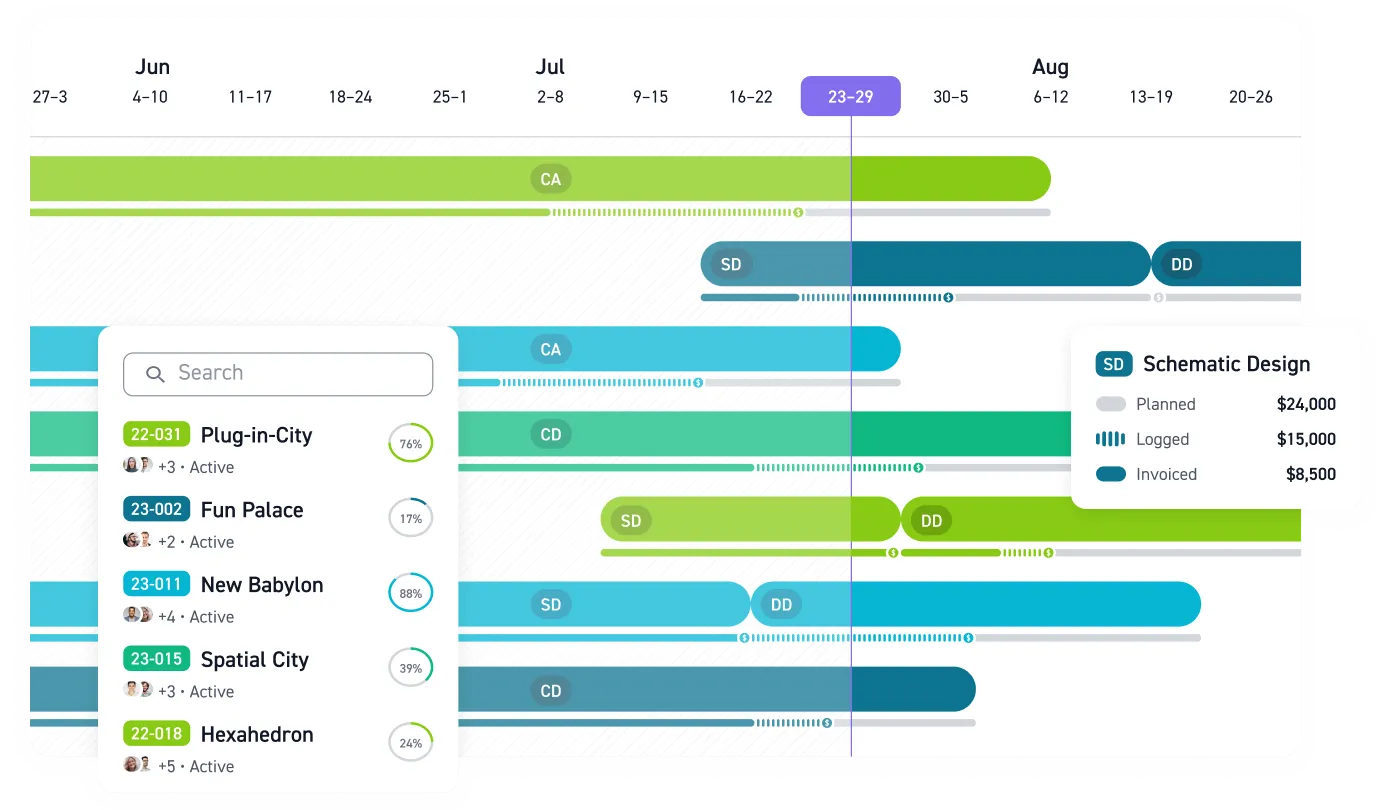
- Contracted fee, planned budget, and actuals to date, visible per phase. Planned budget is hours times rates plus expenses. When the three diverge, you should know in days.
- Automatic alerts for budget-overrun risks before the overrun compounds.
- Subconsultant budgets tracked inside the project, not in a side spreadsheet disconnected from everything else.
- Invoice generation, with approved timesheets and phase percentages flowing into drafts and syncing to QuickBooks Online, so project accounting and the general ledger stay aligned without double entry.
Monograph was built specifically for A&E firms around phase-based project accounting. It handles project accounting (invoices, expenses, and costs) and syncs to QuickBooks Online, which manages the firm-wide books. Start with a repeatable project type, set up phase budgets that mirror how your firm actually works, and compare the new budget view against your current process before relying on it.
Catch Cost Overruns Before They Become Write-Offs
Phase overruns do not wait for month-end close. If your budget, time entries, consultant invoices, and drafts live separately, warning signs arrive after the fee is gone.
Monograph brings project budgets, time, invoices, expenses, and QuickBooks Online into one A&E practice management system. Project managers see contracted fee, planned budget, and actuals by phase while there is still time to adjust scope, staffing, or billing.
Margins move fast. If you want cost data early enough to act, Book a demo.
Frequently Asked Questions
How is job costing different from project accounting?
Job costing tracks what a specific project and phase actually cost, usually with direct labor as the main driver. Project accounting covers invoices, expenses, costs, and alignment with the general ledger. Engineering firms need both to protect margin and keep billing aligned with the books.
Is phase-level job costing practical for a small engineering firm?
Yes, if the phase structure matches how the firm already works. Start with one repeatable project type, require time and consultant costs to land on a phase, and review percent spent against percent complete weekly. Too much detail creates administrative drag, but too little hides overruns.
How do we get accurate time entry when engineers log time late?
Make phase-level time entry easy and review it while the work is fresh. Time reconstructed days or weeks later corrupts project cost history and future fee proposals. Use the data for course correction, not timesheet policing.
Do lump-sum engineering contracts still need detailed job costing?
Yes. The client may see a rolled-up fee, but the estimate underneath is built by discipline and phase. Detailed job costing shows when rework, internal reviews, or poorly defined scope eat into lump-sum margin.
How should subconsultant invoices and unbilled WIP be handled?
Assign every consultant invoice and expense to a project and phase before approval. Review WIP aging every billing cycle because completed work not invoiced ties up cash. Consultant bills on separate timelines should be reconciled before next month's numbers drive project decisions.