
Most A&E project managers spend their weeks reacting. A budget report lands showing a phase that burned through its fee too early, and the scramble begins. By then, the margin damage is already underway. Predictive project management changes the sequence: you track the signals that tell you a project is drifting before the damage becomes hard to recover.
This pattern plays out across 1,800+ firms using Monograph to support more than 13,000 architects and engineers. Traditional management leans on lagging indicators such as final project profitability or a realized budget overrun. Predictive management tracks leading indicators that signal what is about to happen, like hours burned early in a phase or a billing rate sliding below plan.
Why A&E Firms Can't Afford to Manage Reactively
The financial pressure is structural. Recent industry data shows business pressure ranked among top concerns heading into the next year. When margins are already thin, a single undetected overrun can erase expected profit on a mid-size project.
Financial literacy separates firms that deliver well from firms that deliver profitably. Industry analysis flags scope creep as a major cause of failure: firms do more than they were hired for, and nobody catches it until the fee is gone. High-performing PMs watch labor and adjust staffing or scope before losses compound.
The training gap makes this worse. On-the-job training still carries much of the load, while many architects and engineers receive little preparation for managing engineering projects. Without stronger financial habits, PMs default to reactive patterns that consistent metric review is built to reduce.
Leading Indicators Every A&E PM Should Track Regularly
Regular tracking is what catches drift before it compounds.
- Budget burn rate. At your current spend rate, when does the remaining fee run out? When the projected exhaustion date arrives before scope completion, you have an early warning to act.
- Percent complete vs. percent spent. If fee consumption is running ahead of deliverables, the phase is on an overrun path. Tying percent complete to concrete deliverables, such as a finished SD set or completed specifications package, makes this more reliable than gut feel.
- Labor variance, planned vs. actual hours. Labor is the dominant cost in fee-based work. A phase running over planned hours while work remains signals the need to renegotiate scope or reallocate staff.
- Utilization rate. Tracking billable hours helps PMs spot underused capacity, overloaded teams, and quality risk before staffing problems spread.
- Work-in-progress position, or WIP days. Completed but unbilled work sits idle. PMs should know current WIP alongside project budgets because a growing balance affects cash flow before it shows up on an income statement.
When one metric shifts, it usually pulls others with it. Rising labor variance drives up burn rate, compresses the fee timeline, delays billing, and inflates WIP.
Your AIA Contract Already Supports Predictive Tracking
If your firm works under AIA B101, the contract already includes language around the architect's services, responsibilities, and project administration. Basic services are organized into sequential design phases, with owner review and approval typically occurring before the architect proceeds to the next phase. Each phase gate creates a natural checkpoint to compare actual performance against plan.
Quality management checklists reinforce that phase-based structure:
- Schematic design. The schematic design checklist outlines phase objectives, task lists, and deliverables to track completeness and status.
- Design development. The design development checklist supports action when fee use or timing drifts from plan.
- Construction documents. This phase carries high risk because undetected overruns can erase project margin before anyone corrects course.
Phase-level tracking catches problems that total-project tracking can hide. A project may still look healthy in aggregate while one phase is already underwater.
A Practical Implementation Sequence
Practical, repeatable habits beat sophisticated systems nobody keeps current. Roll the work out in this sequence:
- Start with timesheets. Enforce a regular timesheet close across all staff. This creates the data foundation for every other decision.
- Add a review rhythm. Push project health snapshots to every PM and hold a short standing meeting to flag projects drifting toward thresholds. At Workbench, this kind of operational clarity drove 75% less unbilled fees, eight times faster staffing, and a faster billing process.
- Set early warning thresholds. Define triggers for effective billing rate, WIP growth, and burn rate acceleration. Pre-set these in your project management platform so flags surface automatically.
- Expand to portfolio review. Leadership should review the full workload regularly to see how capacity is being allocated across active work.
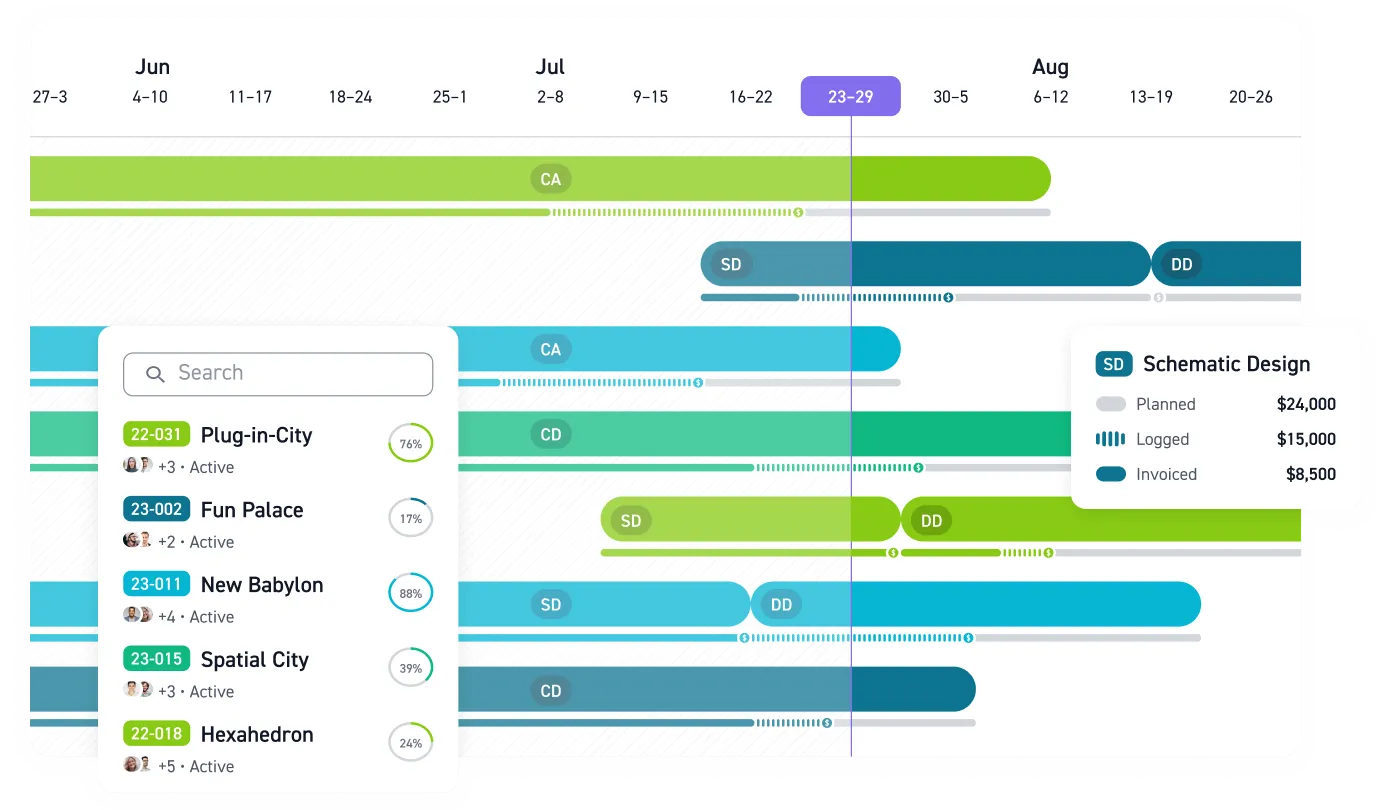
Once that cadence becomes routine, PMs stop assembling data after the fact and start working from current signals. Monograph's MoneyGantt™ shows budget progression from planned to paid in a single visual bar, layering fee data directly onto your project schedule.
What the Performance Gap Looks Like
Monograph's 2026 benchmarks report quantifies the gap between proactive and reactive firms: high-performing firms work 35% more billable hours than low performers, while top firms capture 107% of billable value compared with 83% at the bottom.
The gap traces back to the disciplines covered in this guide. Firms that track burn rate and WIP regularly catch drift that reactive firms only discover at project close. Established best practices reinforce the same pattern.
Your first move is concrete: enforce the timesheet close, pull one project's burn rate data, and compare percent spent against percent complete. That comparison tells you whether you're managing the project or just discovering its outcome.
See Problems Before They Hit Your Margin
Predictive project management works when PMs, operations leaders, and owners see the same signals early. Burn rate, WIP, utilization, and phase-level tracking create that visibility only when the data is current and easy to act on.
Monograph connects timesheets, phases, budgets, and billing in one place, so your team can spot drift before it turns into lost fee. Monograph's MoneyGantt™ gives a direct view of budget progression, making phase-level decisions easier to make and harder to ignore.
If you want a clearer way to track project health before overruns show up in your reports, Book a demo.
Frequently Asked Questions
How often should A&E firms review predictive project metrics?
Regularly enough to catch drift before it compounds. For most A&E firms, a weekly project health check and a monthly portfolio review keep the signal current.
What's the best first metric to track if our firm is starting from scratch?
Start with budget burn rate and compare percent spent against percent complete on one active project. That comparison gives you an early read on whether a phase is drifting.
Can a small firm do this without a dedicated operations team?
Yes. The rollout in this article starts with simple habits: a timesheet close, a dashboard review, and early warning thresholds. Consistency matters more than complexity.
How do we get project managers to use the data consistently?
Make the review cadence part of the week, not an extra assignment that surfaces when something goes wrong. Push project health snapshots, hold a brief standing review, and use the data to adjust staffing, scope, and billing before losses compound.
Data was collected as of April 2026.