


Firm management made easy

If you're spending more time hunting through spreadsheets than managing projects, something's broken. For architecture and engineering firms juggling multiple concurrent projects, the difference between chaos and control often comes down to one thing: standardized processes that actually work.
Process standardization isn't about creating rigid bureaucracy that stifles creativity. According to ACEC research, "While allowing flexibility, standardization of project management processes is essential" for managing multiple projects effectively. It's about building the foundation that lets you do your best work without constantly reinventing the wheel.
Why Standardization Transforms Project Performance
Most A&E project managers know the frustration: every project feels different, every team member approaches tasks differently, and tracking progress requires checking five different systems. This isn't just inconvenient. It's costly. Industry data reveals a utilization gap of 12.8 percentage points between median firm utilization rates (82.4%) and top quartile performance (95.2%).
For a 20-person firm with $150,000 average revenue per employee, moving from 75% to 85% utilization represents nearly $400,000 in additional annual revenue potential. Woodhull, a 25-person architecture firm in Maine, achieved exactly this transformation after standardizing their processes with integrated project management tools. They reduced budget overages by 66% and cut administrative time in half, enabling their project managers to focus on delivering exceptional client work rather than hunting through spreadsheets.
The firms achieving top-quartile performance share one characteristic: they've standardized the processes that enable consistent delivery while maintaining project-specific flexibility. Standardized processes deliver three critical advantages for project managers. First, they enable reliable multi-project oversight without losing track of deadlines or budgets across concurrent work. Second, they ensure consistent quality standards regardless of which team member handles specific tasks. Third, they create scalable workflows that don't break down when workload increases or new staff join projects.
Essential Areas for Process Standardization
Before implementing any system, you need to identify which processes create the biggest operational headaches. Industry research widely supports that a lack of standard operating procedures can lead to each project manager handling projects, resource management, and invoicing differently, resulting in organizational inconsistency.
The most impactful standardization opportunities include:
- Time tracking and budget monitoring with consistent entry methods and reporting cycles
- Project phase management using standardized deliverable checklists and approval workflows
- Client communication protocols defining touchpoints, documentation, and change request procedures
- File organization and version control establishing naming conventions and folder structures
These four areas create the foundation for everything else. You can't manage budgets effectively without consistent time tracking. You can't deliver quality work without defined phase requirements. You can't maintain client relationships without reliable communication protocols. You can't collaborate efficiently without organized project files.
Start with the area causing the most daily friction for your team, then expand systematically to related processes.
Step-by-Step Implementation Framework
The biggest mistake A&E firms make is purchasing software before documenting their actual workflows. According to industry analysis of common architectural firm mistakes, teams frequently fail by "not investing in practice management" while simultaneously "assuming your document filing system works for you." This insight comes from research featuring AIA-credentialed practitioners Mike Bahr, AIA (Partner with 30+ years experience) and Justine Sieber, AIA, NCARB, who emphasize that successful standardization requires documenting and proving processes before implementing technology.
Phase 1: Document Current Reality (Weeks 1-2)
Start by mapping what actually happens, not what you think should happen. Shadow successful project managers for a full week, documenting every step they take to track time, communicate with consultants, update budgets, and deliver milestones. Create simple flowcharts showing how information moves between team members, clients, and consultants.
Identify handoff points where mistakes commonly occur or delays happen. Note which team members consistently produce quality work and ask them to describe their personal systems. Focus on outcomes, not just activities. What makes some projects profitable while others struggle? Which communication approaches prevent scope creep? How do your best project managers stay ahead of potential problems?
Phase 2: Design Standard Workflows (Weeks 3-4)
Transform successful practices into repeatable workflows that any team member can follow. Start with your highest-impact area identified earlier, whether that's time tracking, phase management, communication, or file organization. The key elements of effective standardized workflows include:
- Clear trigger points that define when each step begins and ends
- Specific responsibility assignments identifying who handles each task
- Quality checkpoints ensuring standards are maintained throughout the process
- Exception protocols addressing how to handle client-specific or project-specific deviations
Build flexibility into your standards by differentiating between "fixed" internal processes (invoicing, quality control, file management) and "flexible" client-facing processes (design reviews, presentations, communication frequency). This approach prevents standardization from becoming a straightjacket that stifles client customization, allowing firms to reduce administrative burden while maintaining capacity for meaningful client-focused customization.
Phase 3: Test and Refine (Weeks 5-8)
Pilot your standardized workflows with two or three active projects before rolling them out firm-wide. Choose projects with different characteristics: one complex multi-phase project, one fast-track effort, and one with multiple consultants. This will stress-test your standards.
Document what works and what doesn't during the pilot period. Pay particular attention to resistance points where team members struggle to follow the new processes. These resistance points indicate gaps in training, unclear instructions, or workflows that don't match operational reality. Revise your standards based on pilot feedback, then create simple training materials and quick-reference guides that make adoption easier for the broader team.
Phase 4: Full Implementation with Technology Support (Weeks 9-12)
Only after proving your standardized processes manually should you implement supporting technology. The technology should enable and enhance your proven workflows, not force you to change approaches that already work. Whether you're using integrated platforms like Monograph or connecting separate tools, ensure the technology supports your standardized processes rather than requiring you to adapt to rigid software workflows. The best systems provide structure while maintaining the flexibility essential for A&E project work.
Avoiding Common Implementation Pitfalls
The most expensive mistake is implementing standardization as top-down mandates without involving the team members who will actually use these processes. Design professionals may view process requirements as bureaucratic constraints on creativity rather than tools that enable better work. Frame standardization as enabling better design outcomes by providing more time for creative work rather than administrative tasks. Involve your most respected project managers and senior designers in process development.
When teams see that standardization prevents the quality issues and scope creep that interrupt design flow, and understand how it frees capacity for meaningful client customization and creative focus, they become advocates rather than resistors. Another critical error is attempting to standardize everything simultaneously. According to research from AIA-credentialed practitioners Mike Bahr and Justine Sieber, firms fail by "neglecting the needs and preferences of their clients" when implementing rigid processes. Start with invisible back-office processes like time tracking and file organization before touching client-facing workflows like design reviews or presentation formats.
Measuring Standardization Success
Process standardization succeeds when it reduces administrative burden while improving project outcomes. Track both efficiency metrics and quality indicators to ensure your standards deliver real value. Monitor utilization rates, billing accuracy, and project delivery timelines as efficiency measures. These numbers should improve as standardized processes reduce time spent on coordination and rework.
Quality indicators include client satisfaction scores, change order frequency, and project profitability margins. When Workshop/APD standardized their operations across 50+ staff, they didn't just improve efficiency. They achieved 50% profit growth while gaining 50% efficiency improvements. Their success demonstrates that standardization at scale delivers both operational excellence and bottom-line results.
The most telling success metric is whether project managers can focus more time on actual project leadership rather than administrative coordination. When your team spends less time hunting for information and more time preventing problems, you know standardization is working.
Standardize Your Practice with Monograph
You've seen how standardization transforms scattered chaos into efficient workflows. Firms like Woodhull and Workshop/APD reduced administrative burden by 50% while improving profitability by implementing standardized processes supported by integrated practice management.
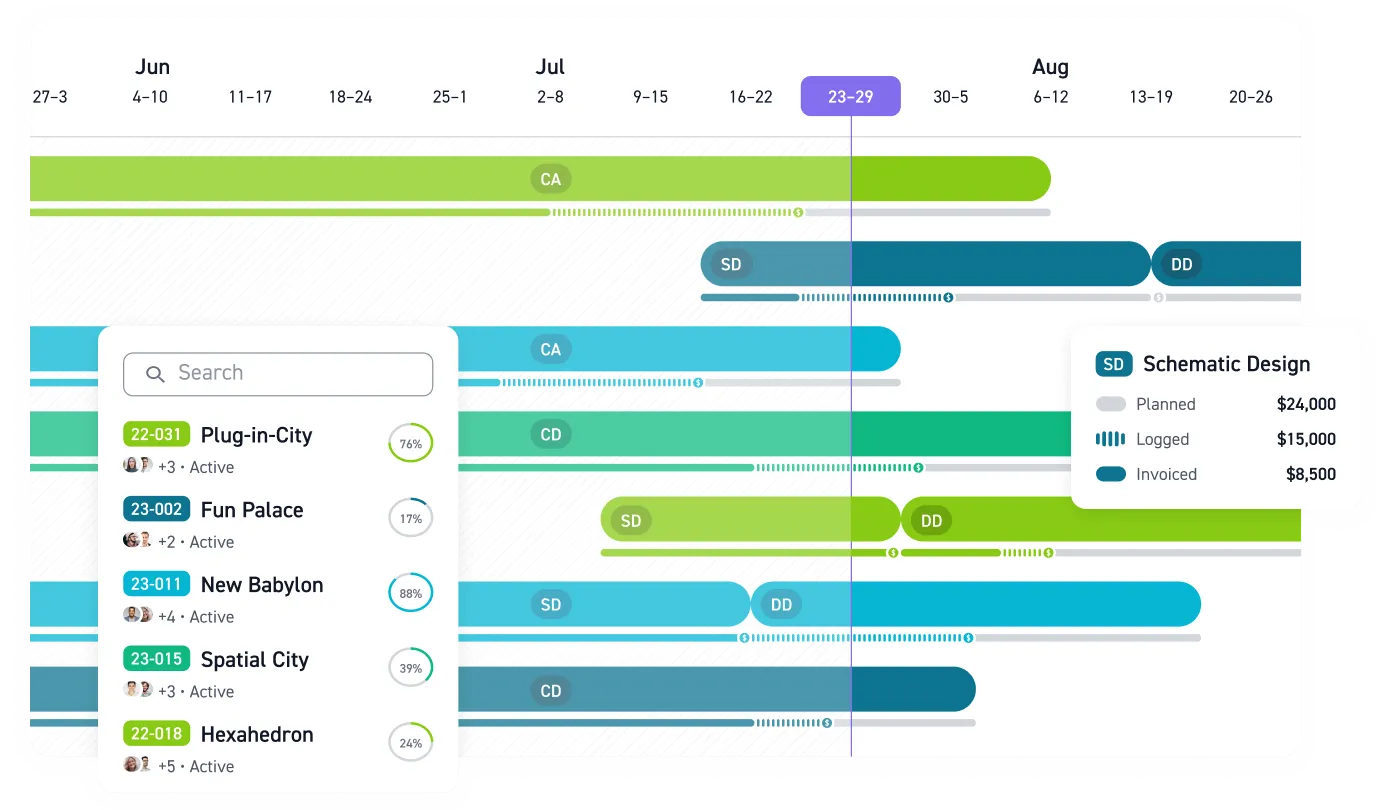
The question isn't whether you need standardization. It's whether you're ready to implement it. Manual standardization works, but technology accelerates results. Monograph provides the platform that executes your standardized workflows automatically: consistent time tracking that auto-assigns from staffing plans, phase-based budget tracking with Monograph's signature MoneyGantt™ visualization for instant visual intelligence into budget-to-cash progression, integrated invoicing that's 2x faster, and QuickBooks synchronization that eliminates double-entry.
Built by former architects who lived through spreadsheet chaos, Monograph understands A&E workflows. Our platform handles the standardization complexity: automated timesheet reminders, real-time budget alerts, efficient consultant coordination, and integrated payment processing. This frees you to focus on design excellence and client relationships.
Over 13,000 architects and engineers across 1,800+ firms use Monograph to work smarter. They're adding 21% more revenue on average in their first year by combining clearer insights with more efficient standardized workflows.
Standardization starts today. Your competitors are already reducing administrative chaos while you're still piecing together data from five different systems. The gap widens every month. Schedule a demo.
Frequently Asked Questions
How long does it take to standardize processes across our firm?
The 12-week implementation framework outlined in this article provides a realistic timeline: 2 weeks documenting current workflows, 2 weeks designing standards, 4 weeks testing with pilot projects, and 4 weeks rolling out firm-wide with technology support. Smaller firms (5-10 people) complete standardization faster, while larger practices (30-50 staff) may need 16-20 weeks for comprehensive implementation.
Will standardization stifle our creative flexibility?
No, when implemented correctly. The key is differentiating between fixed internal processes (time tracking, invoicing, file management) and flexible client-facing processes (design reviews, presentations, communication frequency). Standardize the invisible back-office work that creates administrative burden, while maintaining the flexibility that enables meaningful client customization and creative problem-solving.
What if we're too small to need standardized processes?
The 20-person firm example in this article shows that moving from 75% to 85% utilization through standardization represents nearly $400,000 in additional annual revenue potential. Even smaller firms benefit significantly. When every team member follows consistent time tracking and project management workflows, principals and project managers spend less time coordinating and more time on billable work or business development.
How do we get team buy-in for process changes?
Involve your most respected project managers and senior designers in process development from the beginning. Frame standardization as enabling better design outcomes by providing more time for creative work rather than administrative coordination. Start with invisible back-office processes (time tracking, file organization) before touching design workflows. When teams see that standardization prevents the quality issues and scope creep that interrupt their work, they become advocates.
Which processes should we standardize first?
Start with the area causing the most daily friction for your team. The article identifies four essential areas: time tracking and budget monitoring, project phase management, client communication protocols, and file organization. Most firms find time tracking or file organization provides the quickest wins. These are invisible processes that don't affect client relationships.