

Win-loss percentage is more than just another business metric for architecture and engineering firms. It can be the difference between sustainable growth and spinning your wheels on unprofitable pursuits. But many firms don't track rates, eliminating a potential competitive advantage.
If you're spending precious overhead resources on proposals without knowing which types of opportunities you actually win, you're making business development decisions blind. The data backs this up. Firms pursuing 100 opportunities with a 30% win rate waste overhead resources on 70 unsuccessful proposals, compared to just 50 for firms with a 50% win rate. This represents a 40% waste increase that directly reduces profitability.
Why Win-Loss Tracking Matters for A&E Firms
Most architecture and engineering firms make pursuit decisions based on gut feeling rather than hard data. This creates a cascade of problems that directly impact profitability and growth potential. Poor win rates translate immediately to wasted overhead costs on unsuccessful proposals. That overhead investment comes straight out of your bottom line.
The relationship between win rates and firm growth extends beyond immediate profitability. Firms with structured tracking identify their strongest market sectors, most successful client relationships, and optimal project sizes. This intelligence enables strategic resource allocation, allowing small firms to compete more effectively against larger competitors by focusing on opportunities where they have genuine advantages.
Business development performance is a key factor in distinguishing top-performing A&E firms. Without structured measurement, firms miss critical patterns that drive sustainable growth.
The Basic Formula and What to Track
The fundamental calculation is straightforward: divide the number of proposals won by the total number of opportunities pursued, then multiply by 100 for the percentage.
Win Rate = (Number of Wins / Total Opportunities) × 100
For example, if your team had 27 total opportunities and won 10, your win rate would be 37%. While the basic formula is simple, the challenge lies in deciding what counts as an "opportunity."
Since the A&E industry lacks standardized win-loss methodology, establish consistent definitions for your firm and apply them consistently to track trends. Begin with basic numerator (proposals won) and denominator (proposals submitted), then segment by project type, client relationship, and pursuit stage as your data accumulates.
Here's what successful A&E firms typically include and exclude when calculating win rates:
Include in Your Calculations:
- RFPs and RFQs with formal proposals: Track separately from informal inquiries
- Invited competitions: Include only those where you submitted formal responses through completion
- Negotiated projects: Define in advance what constitutes "significant pursuit resources"
- Multi-stage processes: Consider tracking separately at each stage (e.g., shortlist stage vs. final selection stage)
Exclude from Your Calculations:
- No-bid decisions where you chose not to pursue
- Opportunities withdrawn before you could respond
- Projects canceled by the client before selection
- Preliminary discussions that didn't advance to formal pursuit
Track pending proposals separately using forecast probability assessments rather than including them in historical win-loss calculations. This is consistent with industry guidance that distinguishes between retrospective win-loss percentage and forward-looking win probability.
Real-World Calculation Examples for A&E Firms
Since published worked examples with actual numbers are virtually non-existent in A&E industry sources, here's a realistic hypothetical scenario based on validated methodology and industry benchmarks.
Monthly Tracking: Small Architecture Firm (15 staff)
This hypothetical scenario shows September 2024 Performance:
- Total proposals submitted: 8
- Proposals won: 3
- Overall win rate: 37.5%
Note: This represents a realistic calculation scenario but the 37.5% win rate falls below the industry standard range of 46-50%, indicating opportunity for improvement.
Breaking this down by client relationship reveals the critical pattern most firms miss:
Repeat Client Proposals:
- Submitted: 3
- Won: 3
- Win rate: 100%
New Client Proposals:
- Submitted: 5
- Won: 0
- Win rate: 0%
This dramatic split reflects the relationship-driven nature of A&E work, where industry repeat business averages 80-85%.
Interpreting Your Results Against Industry Benchmarks
Current A&E industry data shows the overall industry average is 47.8%, with top performers achieving 50.0%.
Industry Performance Standards:
These benchmarks help you understand where your firm stands competitively. If your win rate falls below 46.5%, you're experiencing significant opportunity cost from poor pursuit decisions. Rates between 46.5-48% represent industry standard with room for improvement, while achieving 50%+ puts you in the top quartile of A&E firms.
Research reveals that technology adoption creates substantial performance differences. Tech-forward firms achieve significantly higher win rates: 27% expecting 75-100% win rates compared to 13% of tech-static firms. The most dramatic improvement documented comes from structured process implementation, with one case study showing a structural engineering firm's win rate improvement from 34% to 78% after adopting proposal management systems.
Win rates often fluctuate seasonally, with many firms experiencing lower success rates in Q4 due to budget cycles and increased competition as firms push year-end goals. Understanding these patterns helps normalize performance expectations and timing of major pursuits.
Using Win-Loss Data to Improve Business Development
Win-loss data becomes valuable only when you use it to make better pursuit decisions. Successful A&E firms implement data-driven frameworks that evaluate opportunities before investing proposal resources. This filters out poor-fit projects to concentrate resources on work where they have genuine competitive advantages.
Effective go/no-go evaluation examines these critical factors:
Historical Performance Patterns:
- Win rates by project type and size, tracking performance across sectors to identify strength areas
- Success with different client categories, distinguishing performance between incumbent/repeat clients and new clients
Resource Investment Analysis:
- Current team capacity and utilization rates
- Opportunity cost of pursuing versus other potential work
- Required proposal development time and overhead cost
- Timeline alignment with business development goals
This structured approach prevents the common problem of overestimating win probability and underestimating the effort needed to pursue opportunities effectively. By filtering out poor-fit opportunities before investing proposal resources, firms concentrate efforts on work where they have genuine capabilities and realistic win probability.
Firms implementing structured tracking see dramatic improvements. Dynamic Engineering, a 10-person structural engineering firm in Florida, achieved 25% profit growth and doubled their efficiency by moving from spreadsheet-based tracking to project management systems that provided real-time visibility into their win rates and business development performance.
Turn Win-Loss Intelligence Into Practice Management Decisions
You can track win rates in spreadsheets forever, but that data becomes actionable only when it connects to the decisions that matter. Which pursuits should you chase? Which markets should you prioritize? Which client relationships should you deepen?
Win-loss tracking becomes powerful when connected with practice management. Principals use win-loss patterns to guide strategic market positioning and resource allocation decisions. Operations managers connect pursuit success rates to project delivery performance for complete business intelligence. Project managers identify which project types their teams execute most profitably.
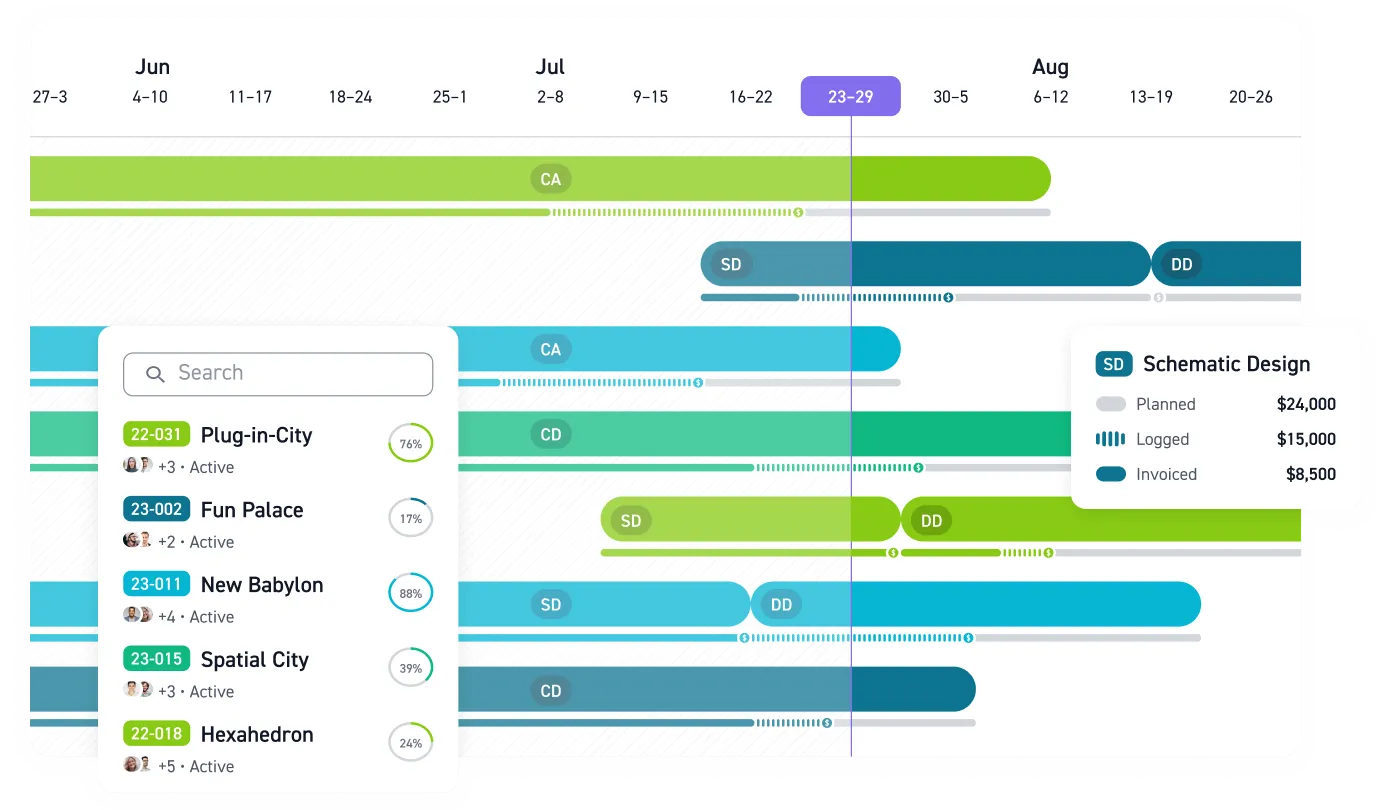
Tools like Monograph's MoneyGantt™ make it easier to visualize which project types you win consistently and which ones deliver the strongest margins. See which pursuits you win most consistently. Monitor which client relationships generate profitable repeat work while watching your pursuit success rates. Connect pursuit decisions to actual project performance, because winning the right work matters more than winning the most work.
The firms winning consistently don't just track numbers. They connect pursuit intelligence with project profitability, team capacity, and financial performance in unified systems that support smarter decisions across every aspect of their practice.
Your competitors are making data-driven pursuit decisions. Start today. Book a demo with Monograph.
Frequently Asked Questions
What if we don't have 6 months of historical data to establish a baseline?
Start with your current month and build forward. Consistency matters more than history. Define what counts as an "opportunity" for your firm right now, apply that definition consistently going forward, and you'll have meaningful trend data within 90 days. The mistake is waiting for perfect historical data while continuing to make pursuit decisions blind.
Should we track win rates by individual team member or just firm-wide?
Start firm-wide, then segment by project type and client relationship before tracking individual performance. You'll learn more from understanding that you win 80% of repeat client work but only 20% of new commercial projects than from knowing which business development person has the best numbers. Individual tracking can demotivate teams and miss the patterns that drive improvement.
How do we handle tracking when clients cancel projects after we've invested proposal time?
Exclude client cancellations from your win-loss calculations, but track them separately as a distinct category. These aren't losses. They're market conditions beyond your control. What matters is applying consistent definitions. If you included the opportunity as "pursued" before cancellation, document why and establish clear criteria for when you'll count similar situations in the future.
What's the connection between win-loss tracking and project profitability?
Winning work is only valuable if that work is profitable. The most successful firms track both pursuit success and project delivery performance together. A high win rate on unprofitable project types destroys firms faster than a low win rate focused on the right work. Practice management systems like Monograph let you see both pursuit patterns and project profitability in one place, so you can identify which opportunities you should win, not just which ones you do win.


.png)