
You know the pattern. Projects wrap up, billable hours drop, and suddenly everyone's scrambling to fill the calendar. Then new work floods in, teams stretch thin, and business development falls off until the next dry spell hits. But this feast-or-famine cycle isn't inevitable. It's the result of lacking the integrated systems, seller-doer training, and systematic pipeline management that separate successful firms from struggling ones.
For A&E firm principals, building a sustainable lead pipeline requires strategies designed specifically for how architecture and engineering firms actually win work. Generic sales tactics don't account for qualifications-based selection processes, extended relationship timelines, or the reality that your best business developers are also your best technical professionals.
The Repeat Client Foundation
Here's the number that should shape every pipeline decision you make: 75% of projects come from repeat clients. Growth depends on winning new work, but stability depends on keeping the clients you have.
Yet most firms treat existing relationships casually. One study found that only 43% of firms systematically measure client satisfaction, compared to 67% of high performers. That gap represents the difference between hoping clients return and knowing they will. This is due to more than passive account maintenance. It requires systematic relationship mining. That is, treating existing clients as the primary source of future revenue rather than new client acquisition.
Making Seller-Doers Work
The seller-doer model dominates A&E business development for good reason. Technical professionals who deliver excellent work build the credibility that wins future projects. Smaller firms and A&E firms rely more heavily on seller-doers than larger firms with dedicated business developers.
But here's the problem: only 35% of firms provide training for seller-doers. Half of principals carry individual business development goals, yet most receive no formal preparation for the role.
- AIA Business Academy provides architecture firm leaders with client relations skills, emphasizing structured methods to keep plans current with market conditions
- ACEC Seller-Doer Accelerator delivers five modules covering strategy, soft skills, sales techniques, proposal writing, and client networking
- ACEC client development courses focus specifically on existing client work, recognizing that relationship mining drives most A&E revenue
- SMPS represents over 7,000 marketing and business development professionals from A/E/C firms, providing best practices to advance business development across the industry
The key is to reframe the seller-doer role entirely: focus on driving more work from existing clients as a relationship manager, not on cold prospecting for new accounts.
Building Pipeline Infrastructure That Actually Gets Used
Most RFPs are predetermined. According to PSMJ Resources, most RFPs are "wired for a specific firm right out of the gate and, in many cases, that firm helped to write the RFP." This reality makes rigorous go/no-go qualification essential and it requires pipeline visibility that connects relationship history to pursuit decisions.
The structural challenge facing most A&E firms: when business development data lives in one system, project management in another, and financials in a third, nobody maintains the CRM. Firms must eliminate manual data recreation between disconnected systems: data that technical professionals are already resistant to recreating across platforms.
Effective pipeline systems for A&E firms share common characteristics:
- Integration with project delivery so time tracking and project performance inform business development decisions without manual data entry
- QBS process accommodation since qualifications-based selection differs fundamentally from transactional sales cycles
- Client relationship tracking that identifies which team members build client relationships driving repeat business
- Go/no-go frameworks that prevent wasting proposal effort on predetermined pursuits
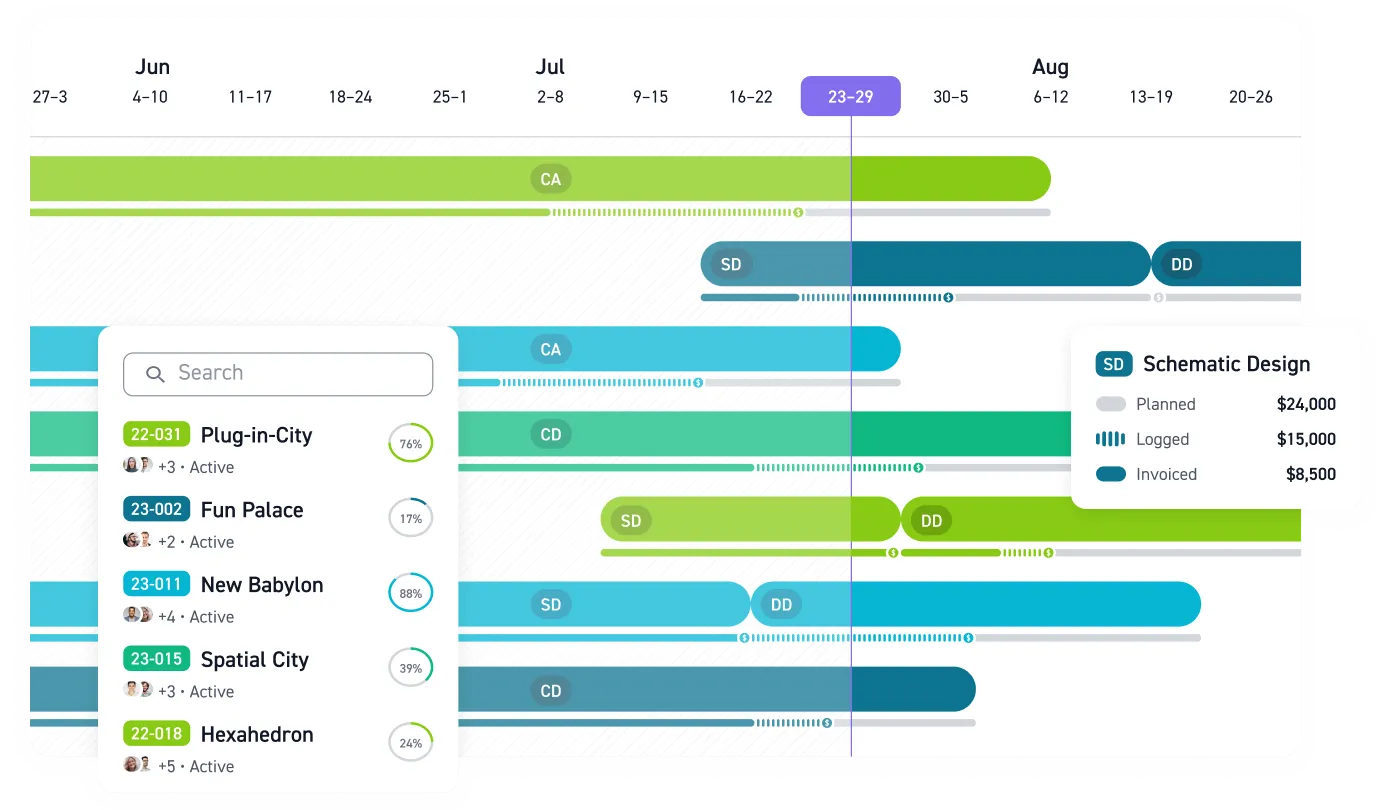
Platforms like Monograph address this integration challenge by connecting business development data to project and financial systems. When pipeline visibility flows directly into project profitability tracking, firms can see which relationships actually generate sustainable revenue.
Firms of around 20 people often wrestle with these platform decisions. But this integration approach produces measurable results for firms of all sizes and disciplines. Woodhull, a 25-person Maine architecture firm, achieved 66% time saved on administrative tasks and 50% faster billing after implementing integrated pipeline and project management systems, freeing their seller-doers to focus on relationship building rather than manual data entry.
Digital Presence as Lead Generation
The shift toward digital lead generation has been dramatic.Research has shown that up to 90% of leads now originate online, a fundamental change from traditional referral-based development.
Firms using consistent digital content see up to 3x more qualified leads and stronger shortlisting, according to Align Marketing Group. But the content strategy matters as much as the consistency.
But there is a common mistake: creating content designed to impress industry peers rather than engage potential clients. Moving beyond portfolio showcasing to address things that your clients care most about, including questions and concerns and what the design process will be like for them, is a more successful way to gain leads.
For A&E firms, visual platforms prove particularly effective. Instagram and Pinterest allow showcasing not just finished projects but process documentation: sketches, working models, behind-the-scenes content that demonstrates how the firm works, not just what it produces.
Turning Strategy Into Systems
Industry benchmarks provide useful context for resource allocation. Small firms (1-50 employees) typically employ one FTE for marketing and business development, while high performers average three. Investment generally runs 5-6% of NSR including labor costs.
Professional association infrastructure offers immediate implementation paths. Over 200 AIA Chapters provide geographic proximity to clients, while AIA Knowledge Communities offer practice-area specific networking. Major conferences including the AIA Conference on Architecture & Design connect participants with thousands of decision-makers. ACEC events serve engineering-specific networking and relationship development.
The firms that escape the feast-or-famine cycle share a common approach: they treat pipeline management as operational infrastructure rather than occasional marketing activity. They invest in seller-doer development, integrate their systems so data flows without manual recreation, measure client satisfaction systematically, and build digital presence that generates qualified leads between project deliveries.
Your technical professionals already know how to build client relationships through excellent work. The question is whether your systems capture that relationship value and convert it into predictable future revenue, or whether you're leaving it to chance and spreadsheets.
Build Pipeline Systems That Work
Every month without pipeline visibility is revenue left on the table.
Your seller-doers are already building relationships through excellent project delivery. The missing piece is systems that capture those relationships and connect them to business development decisions without requiring your technical professionals to maintain yet another disconnected platform.
Monograph connects pipeline tracking to project management and financials in one integrated system. See which client relationships generate profitable repeat work. Track leads alongside active projects. Free your team from manual data entry so they can focus on the relationship building that actually wins work.
Stop managing your pipeline in spreadsheets. Book a Monograph demo.
Frequently Asked Questions
How long does it take to see results from systematic pipeline management?
Most firms see immediate clarity—within the first month, you'll know which relationships generate repeat work and which pursuits deserve your proposal effort. Measurable revenue impact typically shows within two to three quarters as better go/no-go decisions reduce wasted proposal time and stronger client tracking increases repeat project capture rates.
What if our seller-doers resist business development responsibilities?
Reframe the role. Seller-doers aren't cold-calling strangers—they're relationship managers for clients who already trust their technical work. Focus training on mining existing relationships rather than prospecting. When you connect BD activities to project delivery (which they already enjoy), resistance drops significantly. Start with one small ask: track which clients might have upcoming projects.
Can small A&E firms afford integrated pipeline systems?
You can't afford not to have them. Firms under 20 people often struggle most with feast-or-famine cycles because they lack dedicated BD staff. Integrated systems actually cost less than the administrative time your technical professionals spend recreating data across disconnected platforms. One structural engineering firm reduced admin time by 25% after connecting their pipeline to project management—that's real billable hours recovered.
What's the first step to escape the feast-or-famine cycle?
Start with one change: track which clients generate repeat work. Pull your project history and identify the 20% of clients who provide 80% of your revenue. Then ask yourself—what's your systematic plan for staying visible to those clients between projects? That visibility alone changes how you prioritize relationships and allocate business development time.


.png)