


Firm management made easy

Most architecture and engineering firms treat client relationships like completed projects. They consider them finished once the drawings are delivered and the final invoice is paid. This passive approach costs firms significantly more than they realize. Acquiring new clients costs six times more than securing additional work from existing ones, yet most A&E firms lack structured processes to capitalize on their strongest business development asset: satisfied clients.
Building Structured Relationship Processes
The most critical distinction between high-performing and average A&E firms is building formal client retention plans rather than ad-hoc relationship management. Industry repeat business averages 80-85%, demonstrating that strategic relationship management can create a powerful business edge. Successful firms build structured approaches that connect business development directly to project delivery and financial performance. They move beyond individual project manager efforts to firm-wide processes that identify expansion opportunities with existing clients and ensure relationship continuity regardless of staff changes.
This structured approach requires moving beyond spreadsheet tracking and ad hoc relationship management to integrated platforms and formal processes that connect client data, project performance, and business development activities. Firms using real-time dashboards have achieved up to a 25% cut in budget overruns and sped up payment collection by as much as 2.6x. The most effective firms track client relationships with the same discipline they apply to project budgets and schedules. They use CRM systems specifically designed for project-based businesses to document communication preferences, maintain relationship histories, and identify expansion opportunities throughout project lifecycles.
Organized relationship management includes several key components that separate high-performing firms from their competitors:
- Centralized client data management that captures relationship history, communication preferences, and project performance across all team members
- Phase-based communication touchpoints that extend beyond contractual requirements to include proactive updates, strategic discussions, and quarterly executive check-ins
- Post-project relationship maintenance that follows up after completion to maintain visibility and identify future opportunities
- Client champion development that identifies satisfied clients who actively provide referrals, generating an average of 2-3 qualified referrals per year
These structured approaches ensure that relationship management becomes an institutional capability rather than depending on individual principals' personal networks. Communication Excellence as Foundation
Client retention and expansion depend fundamentally on transparent communication throughout project lifecycles and between engagements. The firms that excel at repeat business understand that communication represents both project management and business development simultaneously. Transparent invoicing, regular project updates, and post-project relationship maintenance serve as essential foundations for long-term client relationships.
Leading firms establish structured communication pathways from the outset of every project engagement. They designate key individuals from architecture, engineering, owner's representative, construction management, and end-user groups who maintain vigilant communication with each other. This core team structure serves as the primary information hub, creating multiple touchpoints that keep clients informed without requiring them to ask for updates.
The key insight from research on high-performing firms is that transparent project communication strengthens client relationships and reduces payment delays. Budget progression and timeline adjustments become clearer. When clients understand exactly what they're paying for, disputes are minimized. Particularly through phase-based billing with real-time project profitability tracking and regular proactive updates, it creates stronger foundations for repeat business.
Research identifies several key approaches that high-performing firms consistently use:
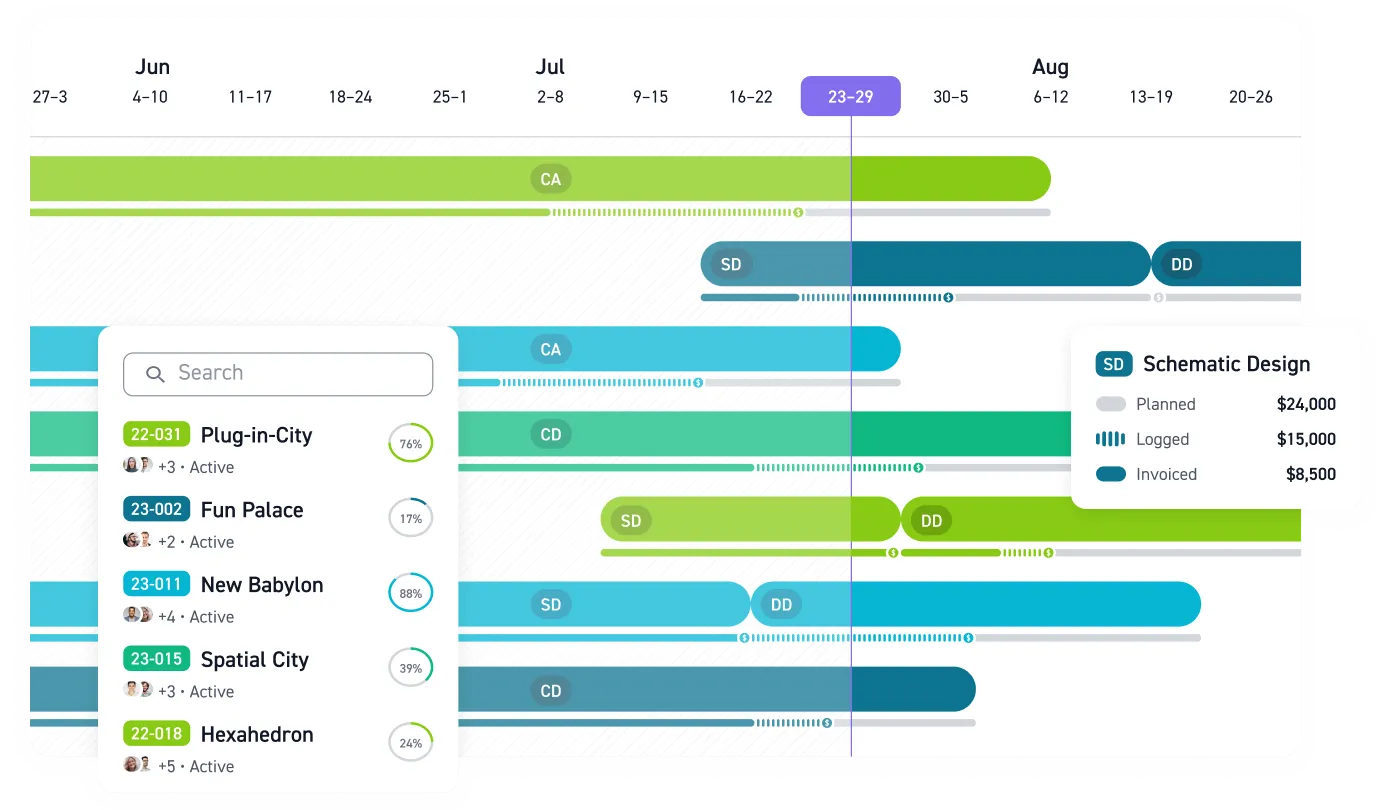
- Real-time project dashboards that provide visibility into budgets, schedules, and team utilization, supporting the transparent communication that research identifies as foundational to client relationships
- Transparent billing practices that break down fixed fees, hourly work, consultant costs, and phase progress in client-friendly formats
- Regular communication and follow-up throughout the project lifecycle and between projects, creating the post-project relationship maintenance essential for generating repeat business
Firms using transparent communication approaches report improved payment timelines and stronger client satisfaction. We’ve seen first hand that firms using real-time dashboards and transparent billing processes have sped up payment collection by as much as 2.6x. Low-performing firms wait 42 days to receive payment, 12 days past due. Transparent communication throughout the project lifecycle and consistent post-project relationship building are strongly linked to increased client satisfaction and repeat business opportunities.
Strategic Retention and Referral Generation
While excellent project delivery creates satisfied clients, deliberate retention approaches convert satisfaction into long-term business relationships. New client acquisition costs far exceed additional work from existing clients, making client retention essential for growth. The most successful firms recognize that converting client satisfaction into repeat business requires deliberate, formal retention approaches rather than passive reliance on project delivery quality alone.
Structured client relationship management is an important practice for business growth. The most effective approaches include structured post-project follow-up, regular executive check-ins during non-project periods, and identifying clients' future facility needs.
The strongest retention programs also address the reality that decision-makers change over time. Firms must build relationships with multiple contacts within client organizations rather than depending on single-point-of-contact relationships that disappear when individuals change roles. Building firm-wide client relationship management processes ensures relationship continuity regardless of individual staff changes.
Effective retention approaches include several proven methods:
- Quarterly executive meetings with key clients to discuss their strategic facility needs beyond current projects
- Annual client feedback sessions using third-party facilitation to gather honest input about firm performance
- Multi-year planning discussions that position the firm as a strategic advisor
- Cross-selling complementary services by identifying additional capabilities that existing clients need
These tactics are the core distinction between high-performing firms that build formal retention plans and average firms that rely on ad-hoc relationship management. With repeat business averaging 80-85%, these retention activities require principal time allocation, but the economics are compelling.
Referral generation requires deliberate cultivation beyond strong project delivery. While satisfied clients represent important business development assets, the most successful firms treat referral generation as a structured process. Firms maintaining organized post-project communication and positioning themselves as experts in specific market niches generate significantly more referrals than firms relying on passive client satisfaction.
Technology Platform Integration
Moving from ad hoc relationship management to organized approaches requires integrated technology platforms that connect client data, project performance, and business development tracking. The most effective systems help firms manage relationships with the same discipline they apply to project budgets and technical deliverables.
After working with 1,800+ A&E firms, we've seen that practices benefit significantly from organized client relationship management approaches that integrate project data, financial performance tracking, and transparent communication. Whether through specialized platforms or integrated CRM approaches, they benefit from project-based visibility, integrated financial data, and transparent communication during billing processes. This organized approach helps firms track client interactions across projects, maintain relationship continuity beyond individual project managers, and communicate project health with clarity that prevents billing disputes.
Organized project tracking and transparent billing represent proven mechanisms for identifying client expansion opportunities and improving cash flow. Workshop/APD, a 50-person New York architecture firm, demonstrated this principle by achieving 50% profit growth through structured business development processes deployed firm-wide. Rather than depending solely on principals for relationship management, they created organized systems that helped their entire team identify opportunities with existing clients while maintaining high project utilization rates.
Building Your Immediate Action Plan
The transition from passive to organized client relationship management doesn't require wholesale process changes. The most successful transitions begin with existing client relationships and proven systems, then expand capabilities firm-wide as teams develop comfort with new approaches.
Start by creating a formal client retention plan centered on your firm's top relationships. Begin with an organized database of key decision-makers, influencers, and referral sources. Firms that track and nurture their top relationships see measurably better results.
Document each relationship's communication preferences, project history, and expansion potential to support targeted engagement. Build structured follow-up processes for recently completed projects while maintaining active engagement with clients during non-project periods. This ensures all client-facing staff understand their role in relationship management, and client interactions are tracked across the organization.
The economic benefits of organized client relationship management compound over time. Firms using real-time dashboards have substantially reduced budget overruns by 15-30% and improved payment collection speed while increasing repeat business. This transforms satisfied clients into long-term partners who generate predictable revenue growth through repeat projects and qualified referrals.
Stop Managing Client Relationships by Memory
You've spent years building great client relationships through excellent project delivery. TYour clients are satisfied, but you might not be capturing that satisfaction into predictable repeat business.
When relationship history lives in scattered emails, project notes sit in closed files, and follow-up depends on whoever remembers to reach out, you're leaving money on the table. Your competitors are already building organized approaches that track client interactions, identify expansion opportunities, and maintain visibility throughout project lifecycles and between engagements.
Built by architects who spent years coordinating complex projects before starting Monograph, our platform brings client relationship management directly into your project workflows. Track every client interaction alongside project performance. See which clients generate your best margins and strongest referrals. Get automated reminders for post-project check-ins and relationship maintenance touchpoints. Connect client communication preferences, project history, and expansion opportunities in one unified platform.
Unlike PE-owned competitors focused on profit extraction, Monograph invests in long-term innovation. Real-time visibility into client project performance strengthens every conversation. When clients ask about budget status or timeline adjustments, you're showing them transparent dashboards instead of hunting through spreadsheets. That transparency builds trust that extends beyond individual projects into long-term partnerships.
Your best clients are ready to give you more work. Stop hoping they remember to call. See how Monograph works.
Frequently Asked Questions
How do I transition from ad-hoc to systematic client relationship management without disrupting current projects?
Start small with your top five clients. Document their communication preferences, project history, and expansion potential in whatever system you're already using for project management. Build one structured follow-up process for recently completed projects, maybe a 30-day and 90-day check-in. Once that feels natural, expand to your next tier of clients and add quarterly executive meetings for strategic accounts.
What if my best client relationships are built on personal connections with specific principals?
Personal relationships are valuable, and structured approaches protect them rather than replace them. When principals retire, change roles, or get too busy, centralized relationship history ensures someone else can step in without starting from scratch. Document communication preferences, project preferences, and relationship nuances so your team can maintain continuity. The goal isn't eliminating personal connections. It's ensuring they survive staff transitions.
How do I measure ROI on time invested in client relationship activities?
Track three metrics: repeat business rate (percentage of past clients who hire you again), average time between projects with the same client (shorter is better), and referrals per satisfied client. Start by calculating your current baseline. Then measure quarterly as you implement structured approaches. Firms see measurable improvements within 6-12 months: repeat rates climbing from 60% to 75%+, time between projects shrinking from 18 months to 12 months, and referral rates doubling.
Our firm is too small to need formal CRM systems. Aren't these approaches overkill for 8-person practices?
Small firms benefit from organized approaches because you can't afford to lose clients to poor follow-up. With eight people, you probably manage 15-30 active clients. That's too many relationships to track reliably in your head or scattered emails. The Workshop/APD case study shows a 50-person firm gaining 50% profit growth through structured approaches. Imagine the impact on an 8-person practice where each client relationship represents a bigger percentage of annual revenue.
How do I get my team to actually use relationship management systems instead of reverting to email and spreadsheets?
Make it easier to use the system than to work around it. Connect relationship management directly to workflows your team already completes: project setup, invoicing, status updates. When logging time or updating project budgets automatically captures client interaction data, adoption happens naturally. And demonstrate value quickly. Show project managers how centralized client history helps them answer questions faster or identify expansion opportunities they would have missed.