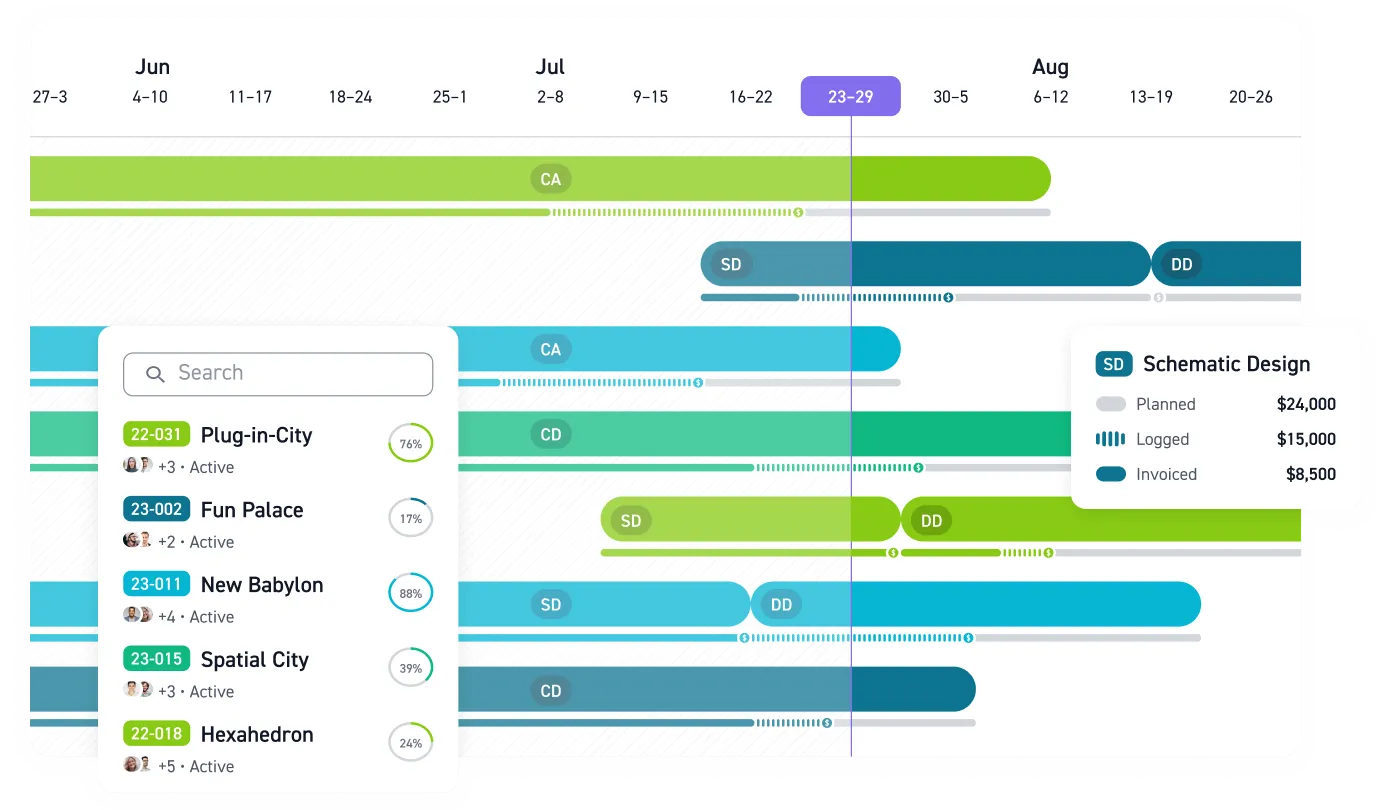


The average A&E firm wins somewhere between 37-44% of proposals it pursues. For every ten opportunities your team pours hours into, more than half go nowhere. Proposals get written, interviews happen, overhead gets burned, and five or six of those pursuits produce zero revenue.
Consider a firm pursuing 100 opportunities at a 30% win rate. That firm absorbs overhead on 70 unsuccessful proposals. Raising that win rate to 50% produces a 29% reduction in wasted overhead. That kind of shift changes the financial profile of the entire firm.
The following seven strategies make it possible.
1. Establish Consistent Win-Loss Tracking
Most A&E firms make pursuit decisions on gut instinct because the industry lacks standardized win-loss methodology. Before you can improve conversion rates, you need clear internal definitions. What counts as a "pursuit" versus a "qualified opportunity"? Are no-bid decisions excluded from loss calculations? How do you categorize the reasons behind wins and losses?
Industry benchmark data shows that while 66-74% of firms track basic win rates, less than half consistently measure client satisfaction, even though repeat clients generate the vast majority of revenue. High-performing firms close that gap, with 67% adoption of consistent client satisfaction tracking compared to roughly 40% industrywide. That 24-point gap represents a significant competitive advantage for firms willing to do the work.
Then break your win rates down by dimensions that actually inform decisions:
- Project manager: Who on your team wins, and with which clients?
- Market sector: Where does your firm convert best?
- BD leader: Which pipeline metrics correlate with closed work?
This foundational data turns every future go/no-go conversation from opinion into evidence.
2. Build a Disciplined Go/No-Go Framework
Every proposal your team pursues is overhead you're spending. Treating go/no-go decisions as a pivotal resource decision, evaluating whether to spend or not spend your precious overhead, changes how you evaluate the pipeline entirely.
The best frameworks evaluate pursuits across multiple dimensions rather than relying on a simple yes/no. With a proposal hit rate of around 40% across the AEC industry, structured pursuit scoring becomes essential. Go/No-Go scoring research shows these frameworks can predict winning proposals 85% of the time and losing proposals 90% of the time when built around foundational criteria:
- Relationship strength: The depth of your existing relationship with the client and key decision-makers
- Pre-positioning status: Whether your firm engaged with this client before the RFP dropped
- Alignment with your ideal work: How well the opportunity fits your ideal client profiles, target markets, and primary services
- Win probability: A realistic assessment of being shortlisted or winning, not an optimistic one
Firms that score low across these dimensions should walk away, even when the project looks exciting. Most A&E firms achieve only a 15-20% win rate on large design projects, largely because they pursue opportunities reactively rather than selectively. Four losses for every win. A disciplined go/no-go framework directly addresses this by filtering out low-probability pursuits before they consume your team's time.
3. Pre-Position Before the RFP Drops
If you're first learning about an opportunity when the RFP hits your inbox, you've likely already lost.
Pre-positioning before RFP release is the single greatest predictor of success separating firms that win from firms that don't.
By the time an RFP is published, the client has usually been talking to someone for months, scoping the project, defining requirements, building confidence in a particular team. The firm that shaped those early conversations has an enormous advantage over competitors scrambling to respond.
This means shifting BD resources away from proposal production and toward relationship development. Have your principals and project managers in conversation with prospective clients well before opportunities are formally announced. For engineering firms managing higher volumes of concurrent projects, this requires disciplined time allocation. For architecture firms with longer project cycles, it means building relationships during the gaps between active engagements.
4. Invest in Seller-Doer Training
AEC training survey data shows that 63% of AEC firms provide at least some business development training to their seller-doers. That still leaves significant room for improvement given that smaller A&E firms rely heavily on technical staff to generate new business.
The most effective firms use dedicated BD professionals as trainers and coaches for technical staff rather than replacing them in client-facing roles. AEC business development trend analysis shows firms increasingly employing this "seller-doer" culture, recognizing that technical expertise combined with BD skills creates more authentic client relationships than dedicated BD staff alone. Practice management guidance in the architecture space reinforces this point: the most effective BD happens when professionals lead with genuine technical enthusiasm and domain passion, something dedicated salespeople can rarely replicate.
5. Connect Your BD and Project Delivery Systems
When business development and project execution live in separate systems, you're guaranteeing the kind of manual recreation that makes your technical team resist CRM in the first place. Won opportunities require manual re-entry into project systems. Project managers start client relationships from scratch, hunting through email for context that should have carried over automatically.
The results of fixing this are significant. Woodhull, a 25-person architecture firm in Maine, achieved a 66% reduction in administrative time and a 66% reduction in budget overages after switching from isolated systems to an integrated approach. Those gains came directly from eliminating the manual recreation between BD and delivery.
Integrated systems connect business development data directly to project management and financial tracking, so the context your BD team builds flows seamlessly into execution. And the performance data from delivery feeds back into smarter pursuit decisions, creating a loop where every completed project makes your next go/no-go call more informed.
6. Protect and Grow Your Repeat Business Pipeline
Repeat business represents about 75% of revenue for most A&E firms. That single number should reshape how you think about pipeline conversion. Your highest-leverage conversion effort is keeping the clients you have, not winning new ones.
This makes client relationship management an operational function, not just a BD one. Every project delivered on time and on budget is a pipeline conversion event for the next engagement. Three relationship-strength indicators separate firms that keep clients from firms that lose them:
- Project manager performance: Which team members develop the strongest client relationships and generate repeat engagements
- Repeat business patterns: Which clients return for additional projects, and which relationships are going cold
- Relationship continuity: Whether context and trust carry through from one project to the next without gaps
Firms that position themselves around problems solved rather than services offered make it easier for existing clients to identify the right opportunities. When a client thinks "we need someone who understands healthcare facility phasing" instead of "we need an architect," you've already won.
7. Use Data to Pursue Better Work, Not Just More Work
The best-managed firms in the industry pair strong BD with strong operations. Top-performing firm rankings evaluate outstanding achievement across profitability, overhead, efficiency, business development, growth, and turnover. These metrics reinforce each other.
Utilization benchmarks across 337 architecture firms show that top quartile firms achieve 95.2% utilization rates compared to an 82.4% median. Firms running at high utilization are forced to be selective about what they pursue, which creates a reinforcing cycle: operational excellence enables selectivity, and selectivity sustains operational excellence.
The bid-to-win ratio connects marketing spend, staffing projections, and cash-flow forecasts into a single metric. When you can see which project types, market sectors, and team members produce the highest conversion rates, you stop chasing volume and start pursuing the work your firm is built to win.
Stop Chasing Every RFP. Start Winning the Right Work.
Pipeline conversion comes down to better decisions, made earlier, with better data, connected to the systems that actually deliver the work.
Most A&E firms treat business development and project delivery as separate functions. The pursuit team wins the work, then hands it off to project managers who start from scratch. Client context evaporates. Lessons from past projects never inform future pursuits. And every conversion metric lives in a spreadsheet that nobody updates.
The firms that win consistently do something different. They connect their BD data directly to project performance. They track which project managers generate repeat business. They know which market sectors convert at the highest rates and which ones drain overhead without delivering results. Every completed project makes their next go/no-go decision smarter.
That kind of feedback loop changes how a firm operates at every level.
Your competitors are already connecting these systems. See how Monograph helps A&E firms track what matters.
Frequently Asked Questions
What's a realistic timeline for improving our win rate?
Most firms see measurable improvement within two to three quarters after implementing disciplined go/no-go frameworks and consistent tracking. The fastest gains come from stopping the pursuit of low-probability opportunities. You'll see immediate overhead savings even before win rates climb. Long-term improvements in pre-positioning and relationship development typically take 12-18 months to fully materialize.
How do we start tracking win-loss data if we've never done it before?
Start simple. Define what counts as a "pursuit" for your firm, typically any opportunity where you spent meaningful overhead on a proposal or interview. Track outcomes by project manager, market sector, and client type. The goal on day one is consistent data you can analyze over time, not perfect data. Most firms can implement basic tracking in a spreadsheet within a week, then move to more sophisticated systems as patterns emerge.
Should small firms invest in CRM software, or focus on process first?
Process first. CRM software won't help if your team lacks clear definitions for pipeline stages, consistent go/no-go criteria, or habits around updating pursuit information. Get your framework working in spreadsheets or simple tools before investing in dedicated software. When you do upgrade, choose systems that connect to your project management and financial tracking. Isolated CRM creates more manual work, not less.
How do we get technical staff to actually participate in BD activities?
Frame BD as relationship development, not sales. Most architects and engineers resist "selling" but genuinely enjoy solving problems and discussing projects with people who share their interests. Provide training that builds on technical credibility rather than replacing it with sales tactics. Start with small asks (attending a client lunch, joining an industry event) before expecting principals to lead pursuit efforts. The firms with the strongest seller-doer cultures treat BD time as billable overhead, not an afterthought squeezed into evenings.
What win rate should we be targeting?
Industry averages for A&E firms fall between 37-44%, but the right target depends on your pursuit strategy. Firms with disciplined go/no-go frameworks often achieve 50-60% win rates by declining low-probability opportunities. High-volume pursuits naturally produce lower win rates. The more useful metric is overhead efficiency: how much are you spending per won project? A 40% win rate with tight pursuit discipline beats a 50% win rate where you're chasing everything that moves.
Workbench, a 30-person architecture firm in California, achieved 8x faster staffing, 4x faster billing, and a 75% reduction in unbilled fees after switching from BQE Core to an integrated approach. Those gains came directly from eliminating the disconnected data and manual recreation between BD and delivery.
.png)