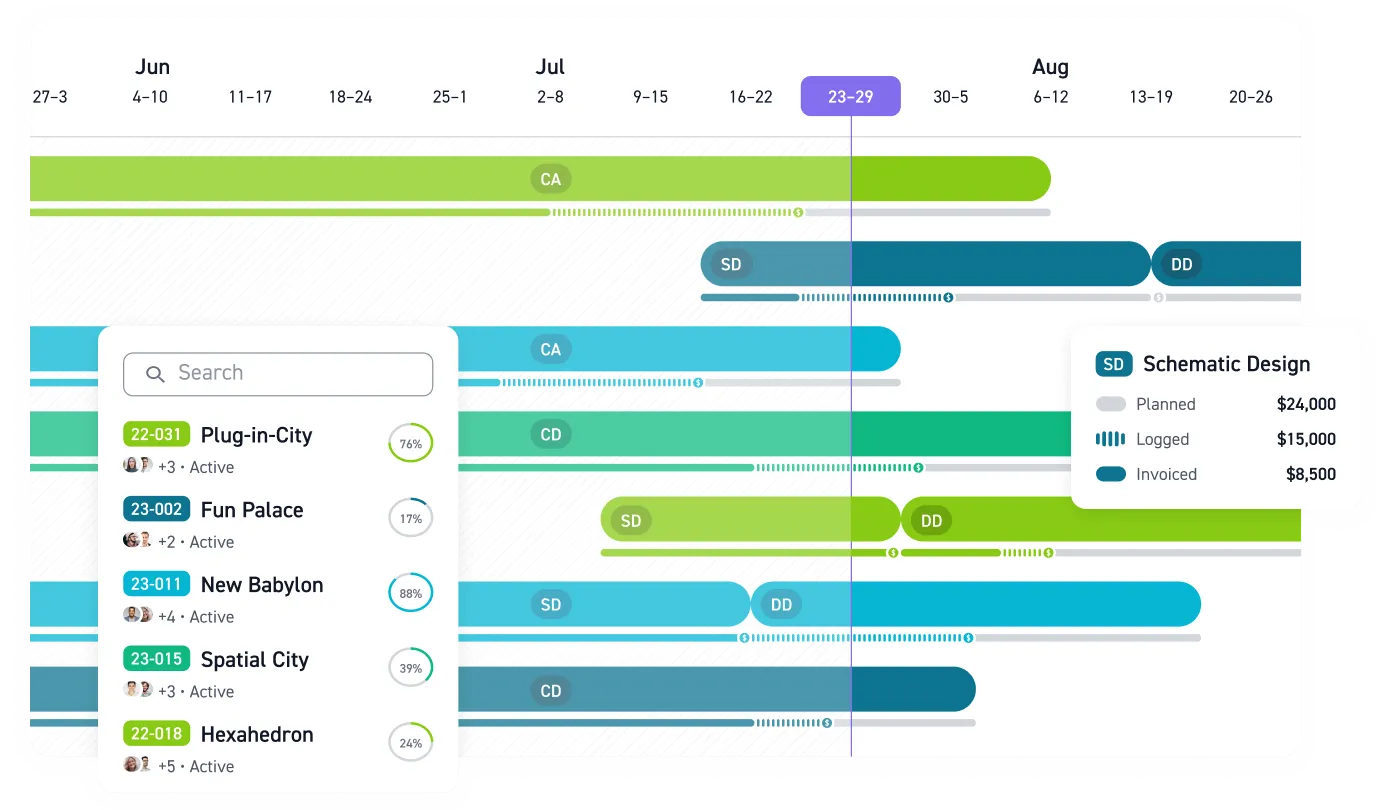


One of the critical aspects of project management is tracking progress, which is where the concept of percent complete comes into play. Percent complete is a measure of how much of a project has been completed at any given point in time, expressed as a percentage. Let's explore why percent complete is important to track on lump sum/fixed fee and hourly not to exceed architecture projects.
1. Evaluating Project Performance
Percent complete is a useful metric for evaluating project performance. By tracking the percent complete, project managers can determine whether the project is on track or behind schedule. It also allows them to identify any areas where the project may be lagging and take corrective action to get it back on track. This information is valuable for decision-making and communicating the project status to stakeholders.
2. Forecasting Project Completion
Tracking percent complete also helps project managers forecast project completion. By comparing the actual progress to the planned progress, managers can predict the time required to complete the project. This information is essential for managing client expectations, as it allows project managers to provide accurate completion dates.
3. Budget Management
Percent complete is also important for budget management. By tracking the progress of the project, managers can determine how much of the budget has been expended and how much remains. This information helps managers allocate resources more effectively and prevent overruns.
By keeping track of progress, project managers can ensure that the project is completed on time, within budget, and to the desired quality standards.
4. Invoicing and Cash Flow
When project managers routinely track percentage complete as part of a standardized project management process, it can make it easier to generate accurate invoices. If this information is available to the person that performs billing, they can easily invoice the appropriate amounts when it is time to invoice a phase of the project. This allows the invoices to be sent out earlier, reduces back and forth between billing and the project managers, and ultimately reduces the time it takes to receive payment for work that is performed.
5. Communication
Finally, percent complete is important for communication. By tracking progress and communicating it to stakeholders, managers can keep everyone on the same page. This helps to avoid misunderstandings and keep the project moving forward smoothly.
In summary, tracking percent complete is critical for project management on lump sum/fixed fee and hourly not to exceed architecture projects. It enables project managers to evaluate project performance, forecast project completion, manage the budget, ensure quality control, and communicate effectively with stakeholders. By keeping track of progress, project managers can ensure that the project is completed on time, within budget, and to the desired quality standards. While it is possible to manually track this across all projects and invoice accordingly, a software system that helps streamline this effort can provide significant efficiency, lower margin of error, and greater visibility into overall profitability.
Where Percent Complete Tracking Breaks Down
Most firms don't lose track of percent complete because they don't value it. They lose track of it because it lives in the wrong place: a separate spreadsheet, a PM's mental model, or a status update that only gets refreshed before a client call.
That gap matters most at exactly the moments described above. A phase that's "probably around 60%" is hard to bill accurately, hard to forecast against, and hard to explain to a client asking for a real number instead of a gut check.
Keeping percent complete tied to the same system that holds your project budgets and phases closes that gap. When progress, budget, and time are all in one place, "where are we on this phase" has one answer instead of three.
Connect progress to the numbers behind it
A percent complete figure is most useful when it's sitting next to the numbers that explain it: hours logged, unbilled value, and what's been invoiced so far. Monograph keeps project tracking connected to time tracking and billing, so a PM (or whoever handles invoicing) can see actual progress against the phase budget without reconstructing it from separate reports.
This doesn't replace a PM's judgment about how "done" a phase really is. It just means that judgment gets recorded somewhere everyone (billing, leadership, the PM covering for you on vacation) can see it, instead of living in one person's head.
FAQs
How do you calculate percent complete on an architecture project?
There's no single required formula. Common approaches include estimating based on hours spent against the phase budget, using milestone-based estimates (a phase moves from 0% to 100% at defined checkpoints), or a project manager's professional judgment based on deliverables completed. The right method depends on the phase type. Design phases are often judgment-based, while construction administration can lean more on milestone tracking.
How often should project managers update percent complete?
Many firms update it weekly, in step with time tracking cycles, so the figure stays close to actual progress instead of drifting stale between status meetings or invoices.
Does percent complete replace earned value analysis?
No. Percent complete is one input into earned value analysis, not a substitute for it. Earned value combines percent complete with budget and schedule data to answer a more specific question: is the project ahead or behind on both cost and schedule, not just "how far along is it."