

Your geotechnical sub finished the borings in March and invoiced you in April. Your client will pay you in June. In between, the liability sits on your books and the cash sits in someone else's account. Under accrual accounting, that expense is recognized when incurred, often before payment and sometimes before the invoice arrives, so every active project with subconsultants carries a funding gap you cover out of pocket.
The gap is measurable. Data from Monograph's 2026 Architecture & Engineering Business Benchmarks Report reveals that A&E firms average 34 days from invoice to payment. Top-quartile firms collect in 22 days; low performers wait 42, which can leave more than one monthly invoice outstanding at a time while their consultant bills come due. Engineering firms feel this twice because a meaningful share of engineering work comes through architecture firms. Money often travels owner to architect to engineer to subconsultant, and every firm downstream waits on the one above it.
Set Payment Terms Before the First Invoice Arrives
Your subconsultant agreement decides whether a slow-paying owner is your problem alone or a shared one. AIA C401, the standard architect-consultant agreement, requires the architect to pay the consultant promptly after being paid by the owner. On the engineering side, the EJCDC subconsultant documents now include four contract options for allocating or sharing the risk of owner nonpayment. Know which one you signed. Pay-when-paid delays the timing of payment but leaves the obligation intact; pay-if-paid shifts the owner's credit risk onto your sub, and several states limit or refuse to enforce it.
Four terms deserve attention before any work starts:
- A payment trigger with a hard cap. Tie consultant payment to your client billing cycle, but add a hard payment deadline, such as no later than 45 days from invoice, so an open-ended clause never strains the relationship.
- Invoice submission rules. Require bills once a month by a fixed date, coded to the project and phase, with a signed agreement in hand before any duty to pay begins.
- A markup policy. PSMJ advises adding a markup when you process subconsultant bills through your own invoice, as compensation for the effort and risk you absorb.
- Prompt-pay compliance. Many states require primes to pay subconsultants within 10 days of receiving a periodic payment. Arizona charges 1% monthly interest starting the eighth day after a missed payment.
Contract language costs nothing to get right and a great deal to get wrong. Every downstream AP decision gets easier when these terms exist in writing.
Build an Accounts Payable Process That Runs on a Schedule
A consultant invoice should follow the same path every time it arrives, whether it comes from your structural sub or your surveyor. An accounts payable process built on fixed steps takes judgment calls out of individual payments and puts them into policy, where a finance manager can defend them.
The core discipline looks like this:
- Match before you queue. Compare each invoice against the subconsultant agreement, percent-complete documentation, and approved scope. Track change orders separately from the base contract with written approval on each one.
- Code before you pay. Assign every bill to a project, phase, and cost category, and keep consultant pass-throughs in dedicated accounts so they never inflate your net service revenue.
- Approve with thresholds and split duties. Set dollar-based authorization levels, and never let one person control an entire financial transaction from receipt to payment.
- Pay on fixed runs. Weekly or biweekly payment runs, prioritized by due date, replace the ad hoc scramble where whoever emails loudest gets paid first.
- Forecast on actual due dates. A rolling cash flow forecast that places consultant bills on their actual due dates shows your runway and gives you time to accelerate collections before reserves dip.
Close the loop monthly. Reconciling project costs with your project managers before month-end means a late-arriving MEP invoice adjusts a live number instead of reopening a closed one.
Slow Payment Costs More Than the Interest
Paying subs late is common enough that some primes treat it as standard practice. A survey of 640 subcontractors found more than 30% of payments arrive late, with an average delay of 36.4 days. Common does not mean cheap. The costs land outside your ledger:
- Subs in a tight labor market avoid projects where money moves slowly, so your slow-pay reputation deprioritizes your work.
- 43% of subcontractors lack the working capital to absorb unexpected expenses, so your delay becomes their crisis and then your schedule slip.
- Payment behavior is public now: rating platforms profile firms as fast, medium, or slow payers, the way Glassdoor profiles employers.
For an engineering firm coordinating structural, civil, and environmental subs across a dozen concurrent projects, the partners who answer your RFIs first are the ones you pay on time. Reliability is a fee you collect in responsiveness.
Run Consultant AP Next to the Project Data
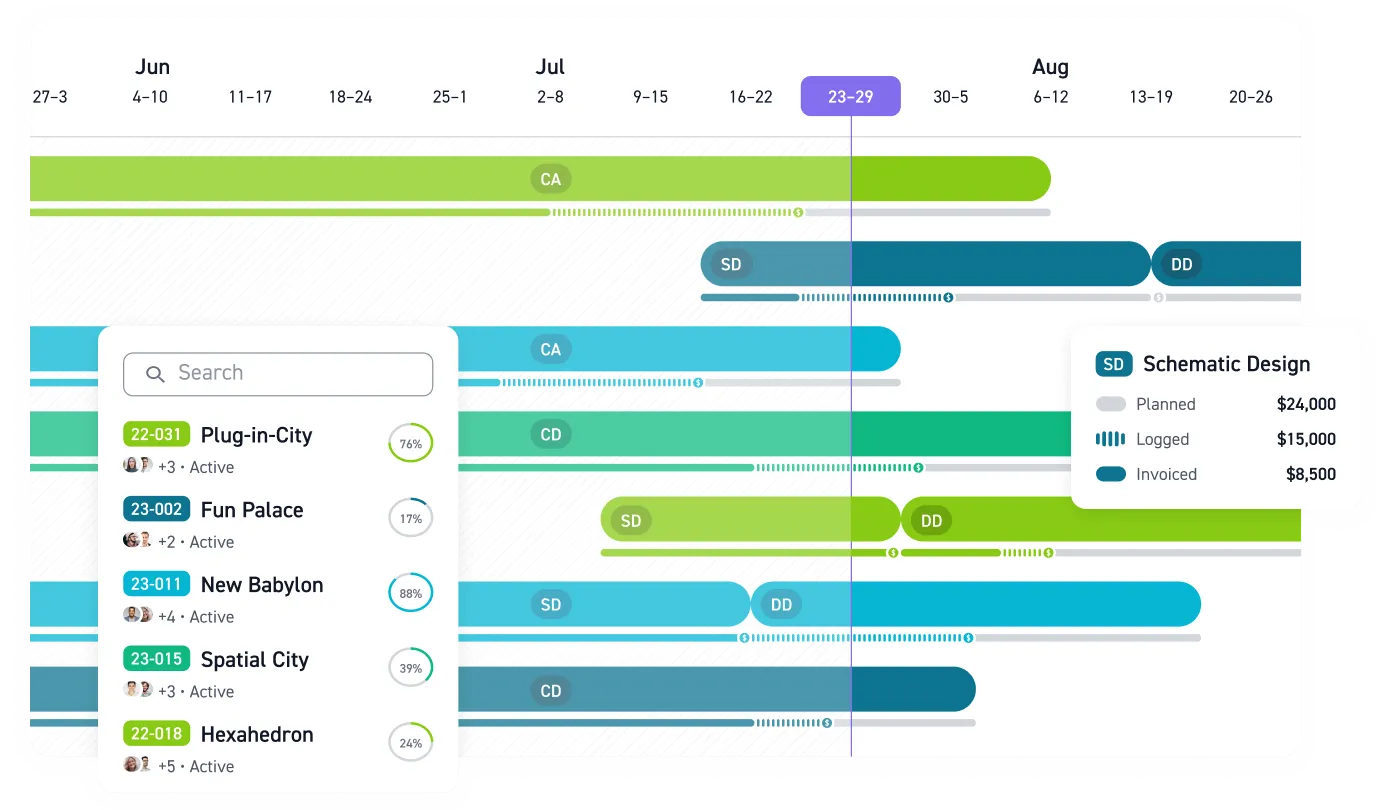
Most of the failure points above trace back to one condition: consultant bills living in email threads while project budgets live in spreadsheets and payments live in the bank portal. Monograph's Consultant Hub puts them in one place. You invite consultants at the project or phase level, request bills with automated reminders, and pay consultants from the same platform that tracks the client invoice covering those costs.
Monograph tracks planned consultant fees, markups, bills, payments, and related project financials in one place. Pay-when-paid becomes easier to manage because your team can track client invoice status alongside consultant bills and issue consultant payments from the same invoicing software workflow. Monograph also connects with QuickBooks Online, syncing client contacts and consultant vendors across platforms, so month-end close draws from one record instead of three.
Speeding up the inbound side eases the outbound side. Red Brick, an engineering and architecture firm, saw 2x faster billing and 25% less time spent on administration after moving from Excel to Monograph. Industry data suggests automating billing and invoicing with e-payments produces 30% faster client payments, and clients can pay online through Monograph's integrated payments. Every day shaved off collection is a day less you fund your subconsultants from reserves.
Stop Funding Consultant Bills From Reserves
Disconnected consultant invoices, project budgets, client collections, and payment dates force your firm to manage the cash-flow gap by hand. That leaves operations leaders chasing approvals, project managers reconciling costs, and principals making payment decisions without a complete view.
Monograph connects consultant bills to project budgets and client payments in one workflow. Your team can track what is due, see when client payments arrive, and release consultant payments without cross-referencing email, spreadsheets, and the bank portal.
Close the funding gap. Put consultant invoices, approvals, collections, and payment dates in one place, then book a Monograph demo.
Frequently Asked Questions
Should we pay consultants before the client pays us?
Start with the signed subconsultant agreement and the prompt-pay requirements that apply to the project. A pay-when-paid term can delay payment timing, but it does not remove the obligation, and a hard payment deadline keeps the delay from becoming open-ended. Forecast each consultant bill on its actual due date so you can accelerate client collections before reserves dip.
Can a pay-when-paid clause solve the cash-flow gap?
It can help align consultant payments with your client billing cycle, but it does not eliminate the gap or the payment obligation. Pair the clause with a hard deadline, clear invoice submission rules, and visibility into when the related client payment lands. Pay-if-paid shifts more risk to the consultant, but several states limit or refuse to enforce it.
How often should we run consultant payments?
Use a fixed weekly or biweekly payment run prioritized by due date. Before a bill enters the queue, match it to the agreement, percent-complete documentation, approved scope, and any written change orders. Fixed runs make cash needs easier to forecast and prevent the loudest email from determining who gets paid first.
What should we do when prompt-pay requirements conflict with our normal process?
Follow the applicable payment deadline rather than waiting for your normal run. Missed deadlines can trigger interest. Build those requirements into your agreements, approval thresholds, and cash forecast so compliance is part of the process rather than a last-minute exception.
Data was collected as of April 2026.